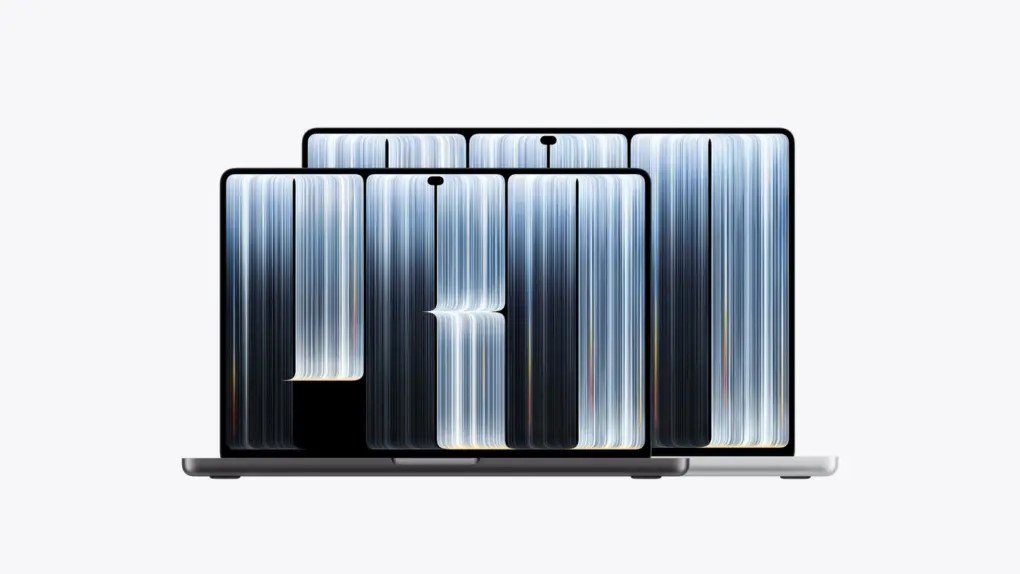
Some buyers of Apple’s new MacBook Pro with PROLED XDR display report headaches, dizziness and nausea. Notably, Notebookcheck measured the tandem OLED panel flickering at just 240Hz. Consequently, some sensitive owners are already returning the $2,899 laptop.
Key Takeaways
- Notebookcheck measured 240Hz PWM flicker at 56% amplitude on the 14-inch model, at 99% brightness and below.
- Owners on Reddit report headaches, dizziness and nausea, and some have already returned the laptop.
- Apple has not commented, and macOS offers no PWM off switch, unlike the iPhone’s Display Pulse Smoothing.
Key Details & Core Impact
Apple unveiled the touchscreen laptop at its Pro and Tell event on October 28. Sales then began on Friday, November 6, in 30 countries. The 14-inch model starts at $2,899 with the M5 Pro chip. Meanwhile, the equivalent mini-LED model costs $2,499, exactly $400 less.
Notebookcheck tested the 14-inch model for its review, published on November 5. It measured PWM flickering at 240Hz, with a 56% amplitude. Specifically, the flicker appears at brightness settings of 99% and below. At full brightness, however, the lab detected no flickering at all. Notebookcheck calls the 240Hz frequency “relatively low” for a laptop display. By comparison, the previous mini-LED MacBook Pro measured 14,880Hz. That older panel therefore flickers more than sixty times faster.
Context & Background
PWM switches pixels on and off rapidly to control brightness. Most people never notice this cycling during normal use. Sensitive users, however, may feel strain, headaches or dizziness. Notebookcheck explains that the cycling should ideally stay undetectable.
Interestingly, this panel also uses DC dimming at every brightness level. Usually, OLED panels reserve DC dimming for higher brightness settings. Yet the 240Hz flicker remains clearly measurable below full brightness. PhoneArena reports a 240Hz to 480Hz range across settings. According to that reporting, 240Hz applies most of the time.
Crucially, the flicker is the panel’s one clear weakness so far. Notebookcheck still scored the laptop 92% in its full review. It also measured a class-leading 2,085-nit peak HDR brightness. In fact, the site calls it the best laptop display available today. The same review also found the battery draining under load. We covered that separate finding in our earlier battery report.
Apple already ships a partial answer on the iPhone 17. Its Display Pulse Smoothing setting disables PWM dimming entirely. Testing, however, found the setting works only up to 25% brightness. No equivalent option currently exists anywhere in macOS.
Industry Reaction & Consumer Next Steps
Owner reports began appearing on Reddit within two days of launch. One owner, Len9a, described feeling “horrendous” after fifteen minutes below half brightness. Another owner called the screen “super-hard to look at” and “almost disorienting.” A third owner prepared to return it, despite calling it their best computer ever.
Furthermore, several owners link the worst symptoms to reading text. MobiDevices highlights one owner whose discomfort peaked in dark mode. White text on black felt worst for that owner. Watching videos, by contrast, caused no symptoms at all.
Cult of Mac and PhoneArena both report owners returning the laptops. Some owners have instead gone back to their older mini-LED models. Still, every complaint so far comes from individual owners. Nobody has published return rates, so the true scale remains unknown.
AppleInsider openly advises flicker-sensitive buyers to skip this model for now. As of November 11, Apple had not publicly addressed the complaints. The company also has not announced any software fix.
If you feel flicker-sensitive, test the laptop in store first. Specifically, spend real time reading text below full brightness. Owners within Apple’s holiday window have until January 8, 2027. Eligible purchases received since November 6 qualify for returns until then. Alternatively, the mini-LED MacBook Pro models remain on sale unchanged. Our MacBook Pro M6 vs OLED MacBook Pro comparison explains both lineups.
The Timeline, Stated Plainly
Apple announced the PROLED MacBook Pro on October 28, 2026. Deliveries and store sales began on November 6, 2026. Owner complaints then surfaced on Reddit from November 8 onward. As of November 13, Apple has not commented publicly. Affected early buyers can return the laptop through January 8, 2027.