You can back up your phone and laptop safely by following one proven pattern: the 3-2-1 rule. Keep three copies of important data, on two different types of storage, with one copy off-site. Consequently, no single failure can erase you. Furthermore, year-end is the perfect moment to set it up.
Key Takeaways
- 3-2-1 rule: three copies, two storage types, one copy off-site.
- Turn on cloud backup on the phone and photo backup separately.
- Add a local copy on a computer or external drive, updated monthly.
- Test a restore once; an untested backup is only a hope.
Apply the 3-2-1 Rule to Real Devices
Your first copy is the data on the device itself. Your second copy is its cloud backup, which is also your off-site copy. Your third copy belongs on a computer or external drive at home. This phone backup guide explains CISA’s 3-2-1 rule in exactly those terms. Together, the three copies survive loss, theft, account lockout, and sync mistakes.
Back Up the Phone Completely
On Android, turn on Backup by Google One and tap Back up now. On iPhone, turn on iCloud Backup and run one manually. Photos and videos need their own switch in Google Photos or iCloud Photos. Additionally, run WhatsApp’s in-app chat backup separately. Check the backup date afterwards, because a toggle without a recent backup protects nothing.
Back Up the Laptop Like It Matters
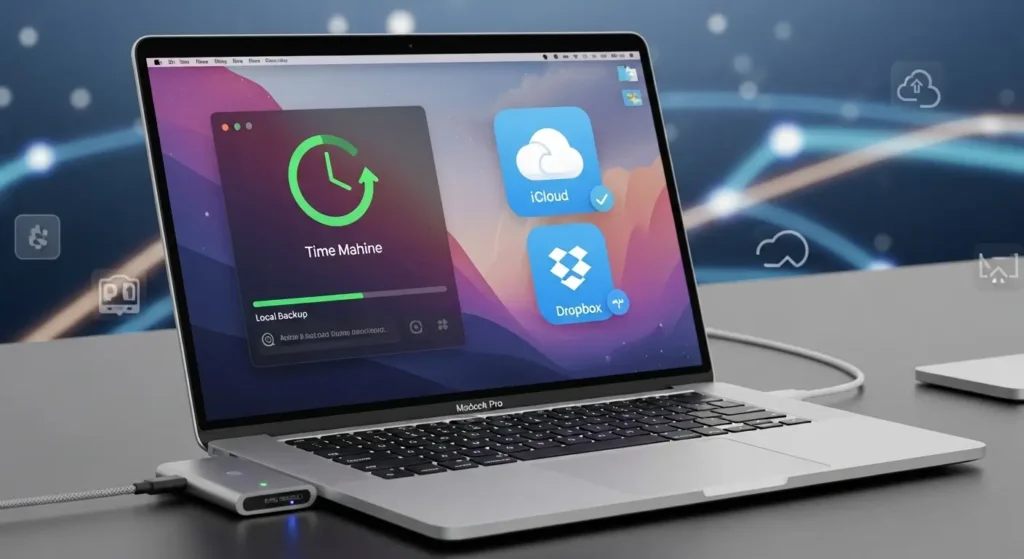
On Windows, use File History or Windows Backup to an external drive. On a Mac, use Time Machine to a dedicated drive. Keep the drive disconnected between backups where practical, which limits ransomware damage. Store one copy of irreplaceable files in trusted cloud storage too. Finally, encrypt backups that leave your home.
Test, Schedule, and Maintain It
Restore one photo and one document from each backup before you trust the system. Then set a monthly rhythm: check backup dates, run a local copy, and review storage limits. Cloud backups stop silently when storage fills, so watch that number. A five-minute monthly check keeps the whole safety net real.
In short, build three copies, automate the cloud layer, keep a local drive, and test restores. That is a backup system, not a backup wish.