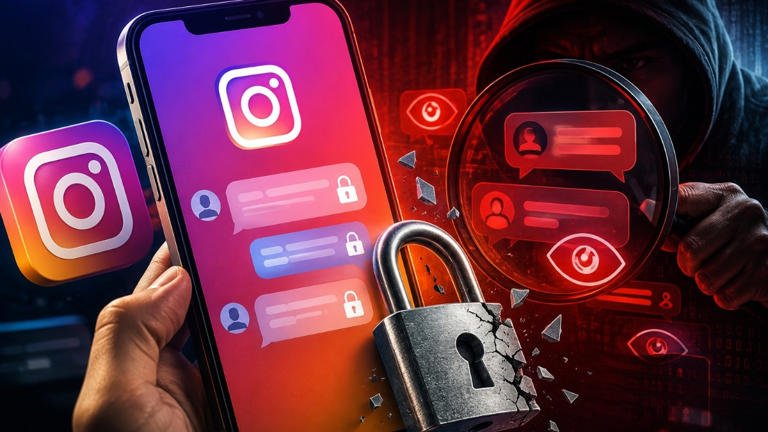
In a startling reversal of its long-standing privacy roadmap, Meta has officially stripped optional end-to-end encryption (E2EE) from Instagram Direct Messages (DMs). The technical rollback, which rolled out globally on May 8, 2026, marks a massive shift in how the social media giant handles user data privacy and content moderation.
With this update, Instagram transitions back to standard server-side encryption. This means that while data is encrypted in transit, Meta now holds the cryptographic keys. Consequently, the company regains the technical capability to access, log, and scan the contents of Instagram DMs—including text, images, and videos—reversing protections previously highlighted in Instagram’s official security updates [1].
Why Did Meta Kill Instagram DM Encryption?
Meta’s sudden pivot comes down to two primary pressures: low consumer adoption and intense regulatory scrutiny. According to internal sources, very few users actively enabled the optional secure chats, making the infrastructure costly to maintain relative to its usage.
More critically, Meta faced immense, compounding pressure from global child safety advocacy groups and law enforcement agencies. Critics argued that E2EE created a “blind spot” for moderation teams, hindering the detection of grooming, child exploitation material, and illicit trade. By removing E2EE, Meta can deploy automated scanning tools directly on server data to flag policy violations before they escalate.
What This Means for Instagram Users:
- No More Private Channels: Your Instagram DMs are no longer secure “only between sender and receiver.”
- Automated Scanning: Meta’s AI algorithms can now actively parse your chat logs for policy and safety violations.
- Data Vulnerability: Server-side keys mean chats could theoretically be subpoenaed by law enforcement or exposed in targeted data breaches.
- Messenger & WhatsApp Unchanged: WhatsApp remains encrypted by default, and Messenger retains its default E2EE rollout.
Deep Technical Impact: Server-Side vs. Client-Side Keys
To understand the depth of this rollback, one must look at cryptographic key management. Under the previous optional E2EE framework, cryptographic keys were generated strictly on user devices (client-side). Meta acted purely as a blind pipeline, incapable of deciphering the data packet payload even under legal subpoena.
The new architecture shifts key management back to Meta’s data centers. While this allows for features like seamless cloud backups, cross-device syncing without physical pairing, and server-side keyword filtering, it fundamentally eliminates true user-to-user confidentiality. Every interaction is now unencrypted at the server ingest point before being re-encrypted for the recipient.
The Cybersecurity Backlash
Privacy advocates and cybersecurity experts have quickly condemned the move, arguing that stripping encryption compromises user safety under the guise of protecting it. As detailed by security analysts at Security Affairs, reverting to standard encryption opens the door for potential surveillance and structural vulnerabilities [2].
Critics also point out the fragmented user experience this creates across Meta’s suite of applications. While WhatsApp handles billions of secure messages daily, Instagram users are left exposed. Media watchdogs, including the BBC, note that this fragments Meta’s unified privacy narrative and signals a willingness to compromise user data sovereignty when politically expedient [3].
What Should Privacy-Conscious Users Do?
For individuals, journalists, and businesses using Instagram to share sensitive information, the recommendation from security experts is clear: migrate off the platform immediately.
If you require absolute confidentiality, transition your conversations to dedicated, privacy-first messaging platforms such as Signal or Meta’s own WhatsApp, both of which still utilize default end-to-end encryption protocols that prevent parent companies from intercepting communications.