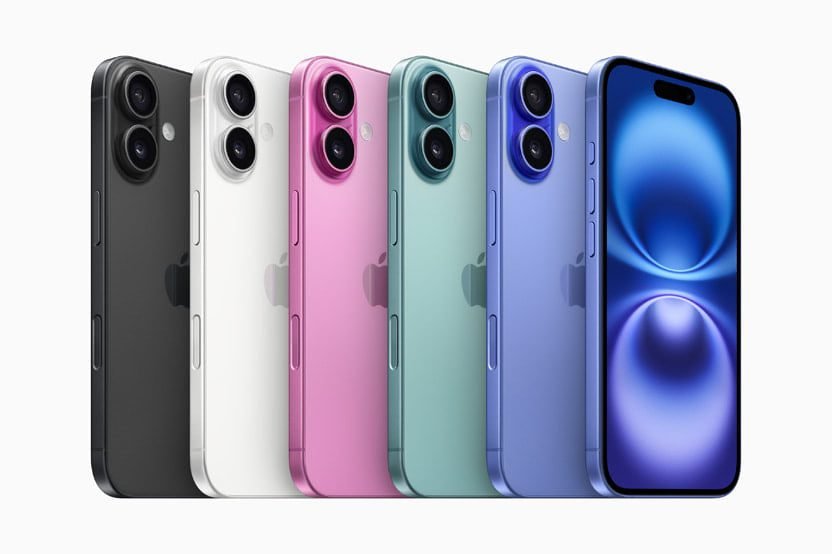
The ads that sold the iPhone 16 are catching up with Apple — in two countries at once. South Korea’s competition regulator is moving to fine Apple up to roughly $50 million over Apple Intelligence features that arrived far later than advertised, while in the United States the clock is running out on a $250 million settlement: eligible iPhone owners have until December 21 to claim up to $95 per phone.
Key facts
- Korea probe: South Korea’s Fair Trade Commission (KFTC) has referred Apple Inc. and Apple Korea for formal review, saying four of nine advertised Apple Intelligence features were not delivered as advertised.
- Possible fine: up to roughly $50 million, according to Korean press estimates. No final ruling yet — Apple has six weeks to present its defence.
- The delay: Siri’s personal-context features were advertised for Korean users in early April 2025. They arrived in US English in September 2026 and in Korean in October 2026 — about 18 months late.
- US settlement: $250 million in Landsheft v. Apple. Claims close December 21, 2026; final approval hearing February 24, 2027.
- Who gets paid: US residents who bought an iPhone 15 Pro, 15 Pro Max or any iPhone 16 model in the US between June 10, 2024 and March 29, 2025. Estimated $25 per device, up to $95 — lawyers now expect at least $61.
What happened in Korea
Investigators at the KFTC submitted their examiner’s report on Tuesday, November 24, and the regulator announced the case on November 26. The allegation is that Apple’s Korean iPhone 16 advertising concealed, downplayed or omitted information that mattered to buyers’ decisions: which Apple Intelligence features were actually available, and when the rest would arrive.
The case covers nine Apple Intelligence features advertised on Apple’s Korean iPhone 16 page between September 2024 and March 2025. Examiners say four of them did not arrive on time or in the advertised form: Genmoji, Image Playground, Siri’s ability to understand personal context, and a fourth Siri capability — reports differ slightly on which one, with the regulator’s release naming step-by-step guidance and MacRumors listing on-screen awareness.
The clearest example is Siri’s personal-context feature. Apple’s Korean page said in September 2024 that it would launch first in US English within the year, then said in February 2025 that Korean support would begin in early April 2025. In reality, the feature reached US English in September 2026 and Korean in October 2026 — roughly a year and a half after the advertised Korean date.
Examiners concluded the conduct amounts to deceptive labelling and advertising under South Korea’s Fair Labeling and Advertising Act, and recommended three things: a corrective order barring similar advertising, an order requiring Apple to publicise the violation, and a fine. They put the sales linked to the ads at about 3.35 trillion won — roughly $2.5 billion. Korean outlets estimate the fine could reach roughly $50 million: the Seoul Economic Daily puts the likely range at 26.8 to 53.6 billion won, while Yonhap and the Korea Times put the ceiling higher, at up to 64 to 67 billion won.
The complaint that started it all came from the civic group Seoul YMCA, which filed with the KFTC in March 2025. The Commission has not set a penalty yet, and an examiner’s report is a recommendation, not a ruling — Apple has six weeks from receiving it to submit written opinions and request access to the evidence.
What Apple says
Apple gave MacRumors a statement defending its record in Korea and disputing the findings:
“We have cooperated with the KFTC’s investigation and disagree with the conclusions in the Examiner’s Report. We look forward to presenting a fulsome defense before the Commission.”
— Apple, in a statement to MacRumorsApple also pointed to what has shipped since: Korean-language support for Apple Intelligence, and the recent launch of Korean support for the new Siri AI. That is true — but it is also the heart of the regulator’s case. The features exist now. The question is whether Apple was straight with buyers about when they would exist, back when the iPhone 16 went on sale in September 2024.
The US settlement: up to $95 per iPhone, deadline December 21
The Korean case is about the same ads at the centre of the American class action. In May 2026, Apple agreed to pay $250 million to settle Landsheft v. Apple, a US lawsuit alleging it marketed personalised Siri and Apple Intelligence features that were not ready when the iPhone 16 launched. Apple denies all wrongdoing and settled to avoid the cost and risk of a trial. The court gave preliminary approval on July 17, 2026, and the claim period opened on September 21.
The money is real, and the deadline is close: claims must be submitted by December 21, 2026. Here is who qualifies and what to expect.
| Eligible iPhone | Purchase window that counts |
|---|---|
| iPhone 15 Pro | June 10, 2024 – March 29, 2025 |
| iPhone 15 Pro Max | June 10, 2024 – March 29, 2025 |
| iPhone 16 | Launch (Sept 2024) – March 29, 2025 |
| iPhone 16 Plus | Launch (Sept 2024) – March 29, 2025 |
| iPhone 16 Pro | Launch (Sept 2024) – March 29, 2025 |
| iPhone 16 Pro Max | Launch (Sept 2024) – March 29, 2025 |
| iPhone 16e | Launch (Feb 2025) – March 29, 2025 |
You must be a US resident, must have bought the phone in the United States — not for resale — and must be the original purchaser. The standard iPhone 15 and 15 Plus do not qualify, because they never ran Apple Intelligence. The iPhone 17 models do not qualify either, because they launched after the class period ended.
How much will you get?
The settlement sets a starting point of $25 per eligible device, adjusted up or down depending on how many valid claims are filed, up to a maximum of $95. The good news for claimants: in a court filing on November 16, the lawyers representing buyers said they now expect at least $61 per eligible iPhone, based on early participation data — which suggests relatively few people have claimed so far. If claims surge before the deadline, that figure will fall. The final approval hearing is scheduled for February 24, 2027, so nobody gets paid until some point next year.
How to claim
File at the official settlement website and select “File a Claim”. You will need the phone’s serial number — found under Settings > General > About — or the Apple Account email used on it. No receipt is required, and the claim form offers an option to file without a claim ID if you never received a notice. You can choose payment by check, direct deposit, PayPal or Venmo, and you must file a separate claim for each eligible iPhone.
Why this keeps happening
This is not the first time Apple’s AI advertising has been found wanting — it is the third. The pattern is now easy to trace, and it is the same story in every country:
| When | What happened |
|---|---|
| June 2024 | Apple demos a personal, context-aware Siri at WWDC — the centrepiece of the iPhone 16 launch |
| Sept 2024 | iPhone 16 launches with Apple Intelligence as its headline feature; the personal Siri is not ready |
| March 2025 | Seoul YMCA files its complaint with South Korea’s Fair Trade Commission |
| April 2025 | Apple drops its “available now” Apple Intelligence claim after a US advertising watchdog inquiry |
| May 2026 | Apple agrees to the $250 million US settlement over the same ads |
| June 2026 | Siri AI is finally announced at WWDC 2026 |
| Sept 2026 | Siri AI ships with iOS 27 on iPhone 15 Pro and newer; US settlement claims open Sept 21 |
| Nov 2026 | Korea’s regulator moves toward a fine of up to ~$50 million |
| Dec 21, 2026 | US settlement claims close |
Tech Mansion asked the question back in December 2024, when the gap between the ads and the reality was already obvious — our analysis, Apple Intelligence Ads: Was the Promise Too Big?, argued the ads sold a Siri that did not yet exist. Two years on, regulators in two countries and a US court have effectively agreed.
The irony is that the Siri Apple promised is now, finally, here. Siri AI launched with iOS 27 in September 2026, and Apple has since shown it can be deeply personal — a massive iOS 27 leak revealed users can even replace Siri’s brain entirely with third-party models like GPT-5.6 or Claude. The product caught up. The advertising never did — and that is what Apple is now paying for, in courtrooms and regulators’ offices alike.
What it means for you
If you bought an eligible iPhone in the US between June 10, 2024 and March 29, 2025, file your claim before December 21 at the official settlement website. It costs nothing, takes a few minutes, and the current estimate is at least $61 per phone — more than double the $25 starting point, precisely because so few people have claimed so far.
If you bought outside the US, the settlement does not cover you — it is a US class action. But the Korean case matters to you anyway: it shows regulators everywhere are now treating AI advertising claims as seriously as any other product claim, and it raises the odds that other countries follow. The features Apple advertised in 2024 are finally on your phone today, in iOS 27 — the argument was never really about whether they would arrive, but about Apple selling them before they existed.
Shopping for an iPhone instead of claiming for one? The iPhone 16 Pro Max still ranks among our best camera phones — just buy it for the camera that is in the box today, not for an AI feature arriving someday.
Frequently asked questions
Am I eligible if I bought my iPhone outside the United States?
No. The $250 million settlement covers only US residents who bought an eligible iPhone in the United States. The Korean regulator’s case is separate and does not pay consumers directly.
Do I need a receipt to claim?
No. The claim form asks for the phone’s serial number (Settings > General > About) or the Apple Account email used on it. You can also file without a claim ID if you never received a notice.
When will I get paid?
Not until after the final approval hearing on February 24, 2027 — and only if the court grants final approval and any appeals are resolved. Expect payment sometime in 2027.
I got an email about the settlement. Is it real?
It may be. The settlement administrator has been sending notices since September 21. But scammers copy these emails, so never click a link in one — go to the official settlement website yourself and file there. The real process never asks for your Apple Account password, card number or Social Security number.
What if I already filed a claim?
Nothing to do — your claim is in. The $61 estimate applies to valid claims already filed as well as new ones.