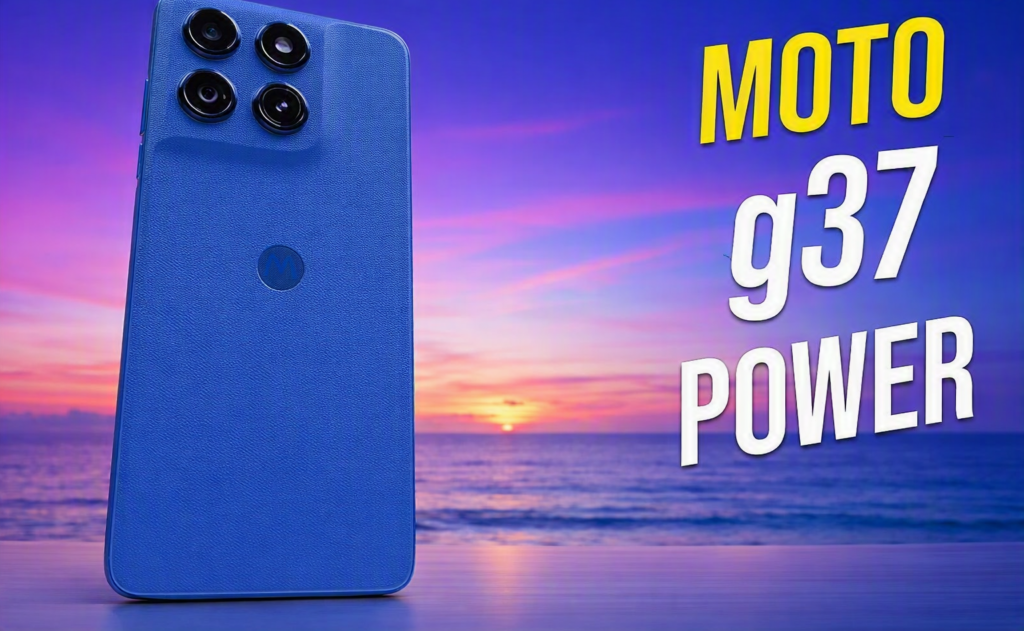
Motorola’s Moto G series has gained the reputation of delivering smart phones with smart features that are considered by the users as being important for everyday use. The new Moto G37 seems to follow the same form with the ability to last for a long time, boasting long battery life, clean Android software and of course the 5G connectivity, all at a budget-friendly price point.
Two-minute verdict
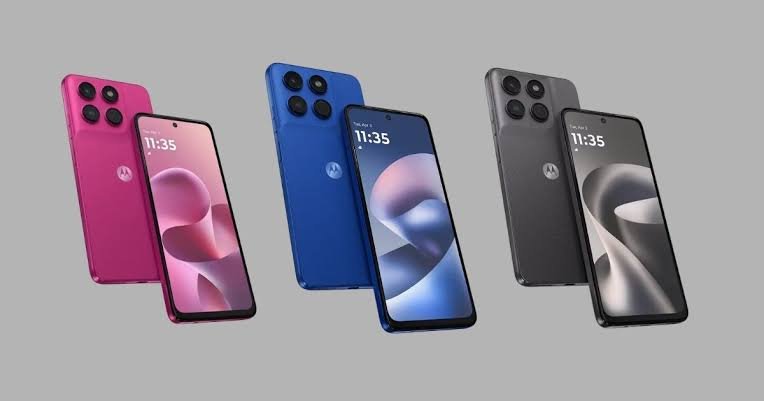
Motorola seems to have concentrated on making the everyday experience smoother and more reliable.
The MediaTek Dimensity chipset is capable of handling social media, messaging, streaming, navigation and casual gaming without ever making the device feel slow. Motorola has also teamed up with the standard, minimal Hello UI software and Android 16 for its Moto G series, which has long been a cleaner version of Android in its price range.
The display is another interesting area. It is still an HD+ LCD panel, but Motorola has added a 120Hz refresh rate, and is stating that the brightness can reach more than 1,000 nits when using it outdoors. It should definitely make scrolling smoother and more visible in bright situations, though the lower resolution may not please everyone.
The largest concession seems to be the display resolution. Several other phones also exist that are in the same price range, offering Full HD panels – which is something prospective buyers should consider. Similarly, Motorola’s 50MP camera has AI-assisted capabilities that are evident, but according to published reviews, it is more suited to everyday snapping than top-tier camera endeavors.
Overall, the Moto G37 looks like a sensible rather than exciting smartphone—and that’s often exactly what budget buyers need.
Pros & Cons
Pros
- Strong design and protection: Gorilla Glass 7i and IP64.
- Clean Android 16 experience
- Bigger battery and reliable performance.
- Smooth 120Hz display
- Stereo speakers with Dolby Atmos support
Cons
- The 26-inch pivot angle is, admittedly, low in 2026.
- The charging power is still quite conservative.
- Camera hardware prioritizes value over versatility
- Less extended software support than some competitors
Price & Availability
Motorola classifies the Moto G37 as a low-cost 5G phone and the price references it has placed in India start at about ₹14,999, whereas the European price is around €249 depending on the configuration and market. It is available in various availability zones around the world and has different storage and RAM options in different countries.
It faces off against Samsung, Redmi, Poco, Realme and Nokia, devices in which software quality, battery life, and other factors can often be as important as specs.
Read More: Oppo Pad 5 5G Review : What You want to Know
Design
Motorola is never short of any good design ideas.
The Moto G37 appears to continue that trend with a practical, understated look rather than something that screams for attention. Durability has been a focus with Motorola, featuring Corning Gorilla Glass 7i, IP64 durability to dust and splash resistance, and SGS-military durability testing for the features.
Those durability upgrades might be worth more to someone who uses his phone for several years before replacing it than a marginal increase in performance.
Setup
In this Moto G37 Smartphone Review it’s known that Motorola’s software has always been one of its biggest strengths and it would seem that the Moto G37 is following the same trend.
The phone is preloaded with Android 16 and Motorola’s own Hello UI, which retains most of Google’s UI while adding some tremendous value features such as Moto Gestures, Moto Secure, Circle to Search and integration with Gemini. It does not seem Motorola has been looking to replace Android with other applications in the phone, but rather add features to complement Android.
Performance
The Dimensity 6300 processor seems to be a perfect fit for the Moto G37’s user base.
It won’t be as competitive as flagship phones, but that isn’t necessarily the goal. Benchmarks and positioning indicates the chipset is aimed at maintaining speed and responsiveness for everyday tasks, while delivering reliable 5G connectivity and energy efficiency.
For messaging, streaming, navigation, web browsing and multitasking, it should provide a smooth experience for most users, though heavy gamers may find themselves pushed up against its limits at some point with the more demanding titles running at higher graphics settings.
Features
In addition to the specs, Motorola has packed in a bunch of enhancements that matter more for quality of life.
The package of stereo speakers with Dolby Atmos offers richer audio than some lower-priced phones, expandable storage, RAM Boost, NFC (in certain markets), reverse wired charging and a fingerprint reader on the side completes the picture.
None of these are groundbreaking features of their own, but combined they make the Moto G37 feel more complete than many like it.
Battery
The battery life is indeed a great selling point of the Moto G37.
The 5,200mAh battery is officially rated for more than a day of battery life, with Motorola saying it can last for up to 43 hours (or longer on lighter usage) between charges. Those numbers, of course, will shift with usage, but Motorola has had a history of good battery performance with budget phones, so hopefully the G37 will last through a day or more.
Charging is still limited to 20W though, and that is now starting to seem like a conservative figure given that there are more charging rivals with quicker charging technology.
Comparisons
If we compare the Moto G37 with the Samsung Galaxy A17 5G, it’s clearly evident that it has a more streamlined software experience and more impressive durability features.
Motorola forgoes a little charging speed and the resolution of the display in exchange for a less fraught Android experience as compared to the Redmi Note series.
Meanwhile, the buyers wanting to pick out the Google Pixel 10a will discover that Google’s phone offers improved cameras and extended software support, but at a much-costlier price.
Final verdict
The Moto G37 looks like the kind of phone that quietly handles messaging, web browsing, streaming, video calls, photography, and navigation without demanding much attention from the user.