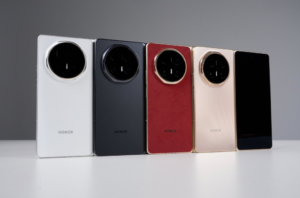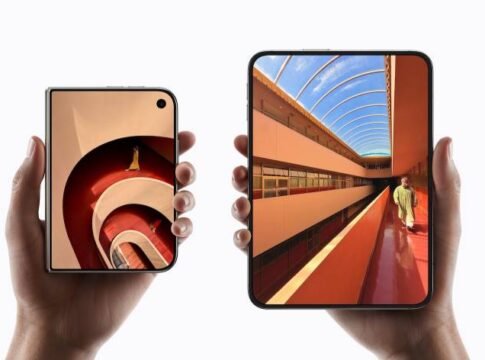
Apple spent years making sure its first foldable did not depend on any single supplier — and then built it around a screen only one company can make well. A new report says Samsung Display could remain the sole supplier of the iPhone Duo’s folding screens for at least another five years, leaving Apple in the same awkward position it was in with the first OLED iPhone nearly a decade ago.
Key facts
- The claim: Samsung Display could stay Apple’s sole supplier of foldable iPhone screens for at least another five years
- Source: Weibo leaker Instant Digital, reported by MacRumors on November 23, 2026
- Why Samsung can’t be replaced yet: its lead in crease control, reliability and manufacturing yields — LG Display would struggle to match it
- The price tag: Apple reportedly pays about $250 per foldable panel under a three-year exclusive deal (earlier claim from the same leaker)
- The precedent: Samsung was also the sole OLED supplier for the first OLED iPhone, the iPhone X in 2017
- Status: a leaker’s claim, not an Apple or Samsung announcement — treat it as a report, not confirmation
What the report actually says
According to MacRumors, the leaker known as Instant Digital posted on Weibo that Samsung’s advantages in crease control, reliability and manufacturing yields would make it very difficult for LG Display to enter the iPhone Duo’s foldable display supply chain. The claim is that Samsung Display could remain Apple’s only source for the folding screen for at least another five years — which would cover the Duo, its successor, and probably the one after that.
That matters because the screen is the Duo. Apple’s first foldable starts at $1,999, and the folding display is its most expensive and most difficult component — and, as the first weeks of ownership showed, its most fragile. Shortly after launch, some owners reported cracks appearing in the inner display. Apple responded on October 26, saying a small number of units were affected, and later briefed its stores on how to diagnose and repair the issue. The hinge, not the panel itself, looks like the weak point: Samsung Display makes only the foldable OLED layer inside Apple’s ten-layer display stack, and the same panel runs without these problems in Samsung’s own Galaxy Z Fold8.
None of that changes the supply picture. If Instant Digital is right, Apple has no second source for the part that defines the phone — and no realistic path to one before the end of the decade.
Why Samsung is so hard to replace
Foldable screens are not a commodity. Samsung Display has spent years refining the ultra-thin glass, the crease and the hinge-side engineering that keep a folding OLED alive through hundreds of thousands of folds, and it supplies the panels for most of the foldable market, including its own Galaxy Z Fold8. LG Display has the technology in principle, but turning a working foldable panel into one Apple will accept — at iPhone volumes, with iPhone yields — is a different problem.
That is the same wall LG hit with ordinary OLED iPhones. Apple backed LG’s efforts to become a second OLED supplier after the iPhone X, but as late as April 2018 LG’s manufacturing challenges were still raising doubts about whether it could supply panels for that year’s iPhones. Foldable panels are harder still: the yields are lower, the tolerances are tighter, and the crease has to survive a durability test no slab phone ever faces.
Samsung also has a head start that compounds. Every foldable panel it ships teaches it something about the next one, while a rival starting now has to catch up on yield, reliability and crease control all at once — the three things Instant Digital names as Samsung’s edge. That is why the five-year figure is plausible even as a leak: it is not a contract term, it is a judgement about how long it takes a competitor to get good enough.
The numbers behind the deal
- ~$250: what Apple reportedly pays per foldable iPhone Duo panel (Instant Digital, earlier claim)
- 3 years: the reported length of Samsung’s exclusive supply agreement, covering the Duo and future models
- 5+ years: how long Samsung could remain the sole supplier, per the new claim
- $1,999: the iPhone Duo’s starting price — the panel alone is roughly an eighth of it
- 10 layers: the layers in the Duo’s display stack — Samsung Display makes only the foldable OLED layer
The iPhone X parallel — Apple has been here before
This is not the first time Apple has launched a landmark iPhone with exactly one company able to build its screen. The pattern in 2017 and the pattern now rhyme closely enough that it is worth laying them side by side.
| iPhone X (2017) | iPhone Duo (2026) | |
|---|---|---|
| The breakthrough | Apple’s first OLED iPhone | Apple’s first foldable iPhone |
| Sole screen supplier | Samsung Display | Samsung Display |
| Why no rival | No other maker could hit Apple’s OLED quality and volume | Crease control, reliability and yields — LG can’t match them yet |
| Apple’s leverage | Weak — analyst Ming-Chi Kuo called the OLED panel the “single most troublesome component for Apple in terms of bargaining power” | Weak again — one supplier for the phone’s defining part |
| Apple’s response | Backed LG’s efforts to become a second supplier; LG still struggled into 2018 | No second source in sight for at least five years, per the new report |
| Price | $999 — the first $999 iPhone | $1,999 — the first $1,999 iPhone |
The iPhone X story ended the way Apple wanted it to — LG and BOE eventually became OLED suppliers, and Samsung’s leverage faded. The Duo story may take longer to reach the same ending, because a folding screen is a harder thing to second-source than a flat one. But the direction of travel is the same: Apple will want a second supplier, and Samsung’s exclusivity is a window, not a permanent state.
What it means if you own — or want — a Duo
For buyers, a single supplier cuts two ways. On the one hand, the Duo’s screen is the best folding panel Samsung Display makes, built by the company with the most foldable experience in the world — and the Z Fold8 proves the panel itself is sound. On the other, a $250 panel with no alternative source is a cost Apple cannot negotiate down, and that cost sits inside a $1,999 phone. If Samsung’s prices move, Apple’s margins — or the Duo’s price — move with them.
Repairs are the other place it shows up. With one panel supplier and a ten-layer display stack, a cracked inner screen is an expensive fix, and Apple’s store guidance on diagnosing the cracking issue suggests it is treating the first reports seriously. Owners should know the difference the evidence points to: the panel is Samsung’s, but the cracking reports point at the hinge and assembly, not the display layer itself.
Looking ahead, the supply picture also frames what comes next. Bloomberg’s Mark Gurman reported on November 15 that Apple has four goals for future Duo models — Face ID, an Action button, a telephoto camera, and a thinner, lighter design — and that Duo 2 prototypes already carry Face ID on the outer display. If Samsung remains the sole panel supplier through those models, Apple will be building its foldable future on a rival’s factory floor for years. That is an uncomfortable position for a company that prizes control over its supply chain — and a very comfortable one for Samsung Display. For the full picture of the phone itself, see Tech Mansion’s iPhone Duo review and our iPhone Duo vs Galaxy Z Fold 8 comparison.
What people are saying
Samsung is not shy about the position it is in. This week it launched an advertising campaign mocking the display issues some iPhone Duo owners have reported — a remarkable move against a customer that buys its most advanced panels. The message is blunt: Samsung’s own foldable, using the same panel, does not crack. SamMobile makes the same point in detail, arguing Samsung Display has nothing to do with the Duo’s display failures — it makes only the OLED layer, the hinge maker has denied blame, and the fault sits with Apple’s design or assembly. The subtext of both is the same: Samsung knows Apple needs it, and it knows you know.
The other reaction worth noting is Apple’s silence. Neither Apple nor Samsung has commented on the supply claims, and neither company confirms supplier arrangements as a rule. That is normal — but it also means the five-year figure rests on one leaker’s word. Instant Digital has a solid record on Apple supply-chain claims, including the earlier three-year exclusivity report, which is why MacRumors carried it. Even so, a leak is a leak: the timeline could shorten if LG’s yields improve faster than expected, or lengthen if they don’t.
Frequently asked questions
Who makes the iPhone Duo’s screen?
Samsung Display. It supplies the foldable OLED panel for the iPhone Duo — the only supplier for that part. Samsung makes just the OLED layer inside Apple’s ten-layer display stack; the hinge and assembly are Apple’s and its other suppliers’ responsibility.
Why can’t Apple just use LG Display instead?
According to the report, LG can’t yet match Samsung on crease control, reliability and manufacturing yields at iPhone volumes. Apple backed LG as a second OLED supplier after the iPhone X and LG still struggled — foldable panels are harder to make than flat ones, so catching up takes longer.
How much does Apple pay for each Duo screen?
About $250 per foldable panel, according to an earlier claim from the same leaker, Instant Digital. Neither Apple nor Samsung has confirmed the figure. At the Duo’s $1,999 starting price, the panel alone is roughly an eighth of what you pay.
Does this mean the Duo’s screen will crack?
No. The cracking reports point to the hinge and assembly, not the panel — Samsung’s own Galaxy Z Fold8 uses the same panel without these issues. Apple says only a small number of Duo units are affected. A single supplier is a business risk for Apple, not a defect in your phone.
Will the iPhone Duo 2 use Samsung screens too?
Almost certainly, if the report is right — the five-year horizon would cover the Duo 2 and beyond. Bloomberg’s Mark Gurman says Apple is working on Face ID, an Action button, a telephoto camera and a thinner design for future Duo models, all of which would still sit on Samsung-made panels.
Watch: iPhone Duo has some really cool features, on Tech Mansion’s YouTube channel.
Sources:MacRumors — Apple May Be Stuck With Samsung for iPhone Duo Screens · SamMobile — Samsung Display has nothing to do with iPhone Duo display failures