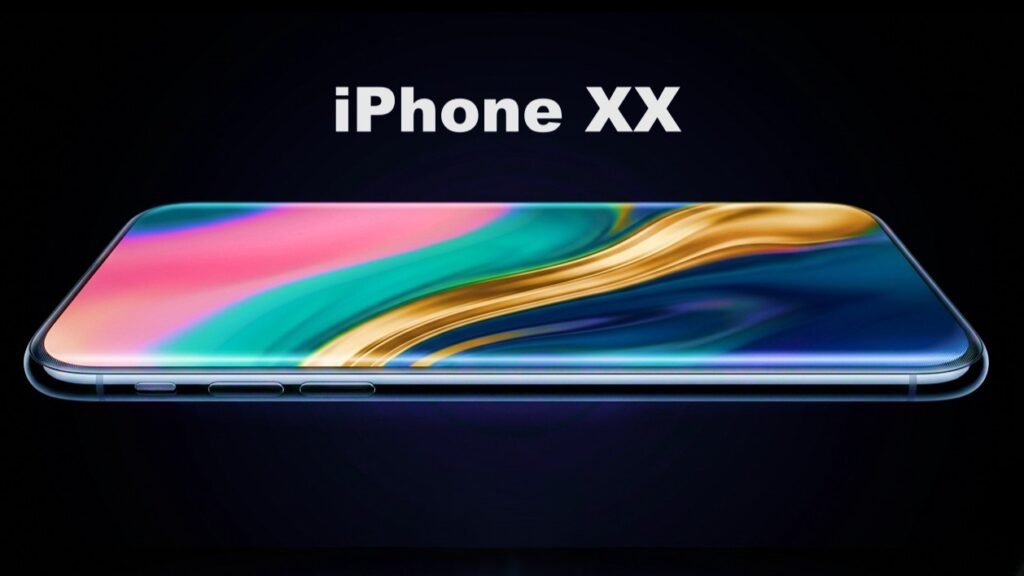
Apple’s 20th-anniversary iPhone keeps getting more exotic. In two reports in two days, the same leaker behind last week’s titanium claim has added two new details: the iPhone 20 Pro‘s frame will reportedly be 3D-printed from titanium powder, and Apple is testing a limited-edition ceramic version of the phone. Both claims come from one source, neither is confirmed, and the phone is still around ten months away — but together they make the anniversary iPhone sound like the most experimental Pro model Apple has ever built.
iPhone 20 Pro — what’s new this week
- 3D-printed frame: parts of the mid-frame made by laser-fusing titanium powder (rumoured)
- Ceramic edition: a limited production run, only if it passes engineering validation (rumoured)
- Why it matters: a stronger frame and more design freedom for the all-glass body
- The catch: one leaker, a mixed track record, and no independent confirmation yet
- Launch: September 2027 (expected); even the name is unconfirmed
A titanium frame, printed layer by layer
The first claim arrived on Friday, November 27. In a new post on Weibo, the leaker known as Fixed Focus Digital claims Apple plans to manufacture parts of the iPhone 20 Pro’s mid-frame using a laser-based titanium powder 3D-printing process — one which would result in significantly improved durability, according to MacRumors. The leaker is apparently so confident in the claim that he suggested followers take screenshots of the post and reference it next year when the device is announced.
The process itself is straightforward to picture: lasers fuse successive layers of titanium powder into a solid part. Apple says the technique allows for more complex structural designs than conventional manufacturing methods, and significantly reduces material waste. And it is not new to Apple — the company already uses it to produce the titanium cases of the Apple Watch Ultra 4 and the titanium Apple Watch Series 12, after debuting the process with the Ultra 3 and Series 11. Apple also uses it for the iPhone Air’s USB-C port enclosure.
That matters because of what the anniversary iPhone is supposed to be. The phone is tipped to be a glass-heavy redesign, with a front panel that curves down on all four sides toward the frame and bezels so thin they are nearly invisible head-on. A printed frame would give Apple more freedom to shape the thin metal band between those glass panels — the kind of complex geometry that is hard to mill from a solid block. Bloomberg’s Mark Gurman has described the planned changes as the biggest overhaul of the Pro line since the iPhone X.
There is still an open question, and MacRumors flags it: heat. It remains unclear how Apple intends to address the thermal challenges of titanium, given the superior heat dissipation of the aluminium used in its current Pro models. The iPhone 18 Pro models currently use aluminium frames — Apple only switched away from titanium with the iPhone 17 Pro, so a return would be a quick reversal. We covered that earlier claim in our report on the iPhone 20 Pro titanium leak; this week adds the how.
A ceramic iPhone 20 Pro — but only a few of them
The second claim came a day earlier, on Thursday, November 26. The same leaker claims to have obtained ceramic components made for the 20th-anniversary iPhone, according to MacRumors. Production of these parts would be limited, which points to a special-edition version of the phone rather than a finish every buyer can pick.
There are two important caveats. First, the leaker did not say which part of the phone would use ceramic — it could be the rear panel, another section of the body, or a smaller exterior component. Second, the project would enter mass production only if it clears engineering validation testing (EVT), the stage where a design has to prove it can hold up before factory lines commit to it. The leaker even joked that the scarcity could make the phone climb in value.
This would not be Ceramic Shield. The iPhone Air has Ceramic Shield 2 on the front and Ceramic Shield on the back — ceramic crystals inside a glass material. A ceramic edition would mean ceramic as a body material in its own right, and Apple has form here: the Apple Watch Series 12 comes in Pearl White and Night Blue ceramic finishes, and the company has released ceramic Apple Watch Edition models in the past, including a white ceramic version of the Series 5.
It would also be expensive. PhoneArena did the maths on Apple’s ceramic premium: the ceramic Apple Watch Series 12 costs $899 against $399 for the aluminium one, more than double. Apply a similar ratio to a $1,199 iPhone and a ceramic edition could cost as much as $2,700. That is their speculation, not a leak — our earlier reporting put the regular model’s starting price at $1,299 in one report and up to $1,500 in another. But it shows why a ceramic iPhone would be a collector’s item, not a mainstream model. As Notebookcheck cautions, Apple doesn’t usually offer limited-edition iPhones, so this one deserves extra scepticism.
How this fits the iPhone 20 Pro picture so far
The materials are only the latest layer of a picture that has been building for months. The headline claim remains the camera: a 200MP main sensor built around LOFIC technology, which would be Apple’s biggest camera jump ever. The display is tipped to curve on all four sides, and we have already seen the evidence — a leaked cover-glass sample with rounded corners and smaller cutouts for the front camera and Face ID. Apple is reportedly testing four prototypes in parallel, two with the all-around curved glass and two with conventional flat displays as a fallback.
Other reported pieces of the puzzle: a new 17nm logic process for the primary rear camera sensor, and a possible change to the physical buttons, with the dedicated Action button merging into the Camera Control — a change we covered in our report on how future iPhones could lose the Action button in a button merge. Under the hood, the phone is tipped to run an A21 Pro chip on a second-generation 2nm process. And Samsung, Xiaomi and Oppo are all reportedly working on their own quad-curved, almost bezel-free flagships to answer it, as we covered in our report on the bezel-free flagship race. If the camera lives up to the leaks, see how it stacks up in our best camera phones roundup.
| iPhone 18 Pro Max (2026) | iPhone 20 Pro Max (rumoured) | |
|---|---|---|
| Display | 6.9-inch OLED, flat, 120Hz | ~7-inch quad-curved OLED, 120Hz |
| Main camera | 48MP, variable aperture f/1.48–f/4 | 200MP LOFIC sensor |
| Frame | Aluminium unibody | 3D-printed titanium |
| Special edition | — | Ceramic model, limited run |
| Chip | A20 Pro (2nm) | A21 Pro (2nd-gen 2nm) |
| Battery | 5,391–5,567mAh | ~6,000mAh silicon-anode |
| Starting price | $1,299 | $1,299–$1,500 (rumoured) |
| Launch | September 2026 | September 2027 (expected) |
Price, launch date and the missing iPhone 19
Apple is widely expected to unveil the iPhone 20 Pro and Pro Max in September 2027, to mark 20 years since the original iPhone — and it may skip the iPhone 19 name entirely to get there, just as it jumped from the iPhone 8 to the iPhone X for the 10th anniversary. On price, the leaks disagree: one report puts the starting price at $1,299 — the same as the iPhone 18 Pro Max costs today — while another suggests the range could climb to $1,400–$1,500 if all the rumoured hardware makes the cut. A ceramic edition, if it happens at all, would sit above that. Either way, this is shaping up to be Apple’s most expensive mainstream iPhone, and the final price will only be clear much closer to launch.
What people are saying
The reaction has been mixed. PhoneArena notes that most comments in a Reddit discussion of the materials rumours questioned why Apple keeps changing Pro materials every couple of years — titanium, then aluminium, now titanium again. It is a fair question: the iPhone 15 Pro and 16 Pro used titanium, the 17 Pro and 18 Pro switched to aluminium, and the 20 Pro would switch back, this time with a new manufacturing process on top.
The leaker, for his part, is leaning into the claims — inviting followers to screenshot the 3D-printing post and check it when the phone is announced. The sceptics have a point too: Fixed Focus Digital has a mixed track record on unreleased Apple products, no independent confirmation of the ceramic model has emerged, and EVT is exactly the stage where ambitious ideas get dropped. The smart way to read all of this is as a direction of travel, not a spec sheet.
Everything in this article is a rumour, and both new claims come from a single leaker. Apple has confirmed nothing about the iPhone 20 Pro — not the name, not the materials, not the camera, not the design, not the price. The ceramic edition still has to pass engineering validation testing, prototypes change, features get cut, and a flat-screen fallback is reportedly still on the table. We will update this story as the leaks firm up.
iPhone 20 Pro: your questions, answered
What is 3D-printed titanium, and why would Apple use it?
It is a process where lasers fuse successive layers of titanium powder into a solid part. Apple says it allows more complex structural designs than conventional manufacturing and significantly reduces material waste. Apple already uses it for the titanium cases of the Apple Watch Ultra 4 and Watch Series 12, and for the iPhone Air’s USB-C port enclosure.
Will there really be a ceramic iPhone 20 Pro?
Only a rumour for now. Leaker Fixed Focus Digital claims to have obtained ceramic components and says planned production capacity is very low, pointing to a limited edition. The project must still pass engineering validation testing, and it is not clear which part of the phone the ceramic would cover. Apple doesn’t usually offer limited-edition iPhones.
How is this different from last week’s titanium leak?
Last week’s claim was that titanium returns to the iPhone 20 Pro frame. This week’s claim adds how it would be made — 3D-printed from titanium powder — plus the separate ceramic limited-edition claim. Both come from the same leaker, Fixed Focus Digital.
When is the iPhone 20 Pro coming out?
September 2027 is the expected window, in time for the 20th anniversary of the original iPhone. Apple has not announced a date, and has not even confirmed the name — it may skip the iPhone 19 entirely.
How much would a ceramic iPhone 20 Pro cost?
No leak has put a price on it. PhoneArena’s speculation, based on the ceramic Apple Watch Series 12 costing more than double the aluminium one ($899 vs $399), suggests a ceramic iPhone could reach $2,700. The regular model is reported at $1,299 in one report and up to $1,500 in another. Nothing is official.
Sources:MacRumors (3D-printed titanium), MacRumors (ceramic edition), Notebookcheck, PhoneArena and Gadgets360. For Apple’s current lineup, see the official iPhone page.