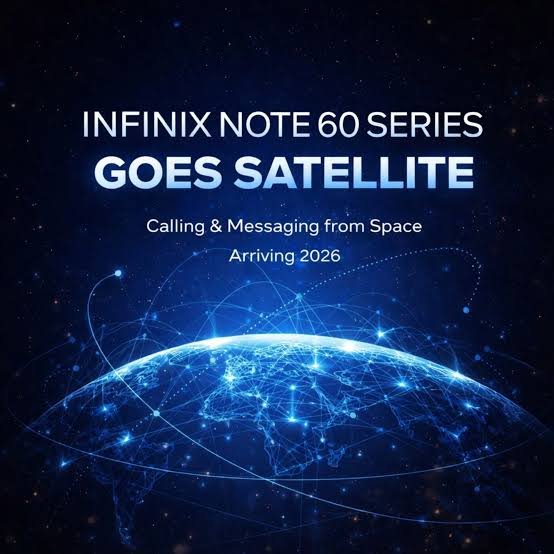
If you’ve ever lost signal in the middle of nowhere, you know that feeling of isolation — no calls, no messages, no way to reach the people who matter. It’s an experience most of us have had at least once, and that’s exactly why the idea of Satellite Calling to Phones feels so exciting and almost futuristic. In 2026, Infinix is taking steps to make satellite connectivity a real, everyday part of your smartphone experience — not just an emergency fallback or something restricted to rugged outdoor gear. Let me walk you through what this means, how it works, and why it might matter to you.
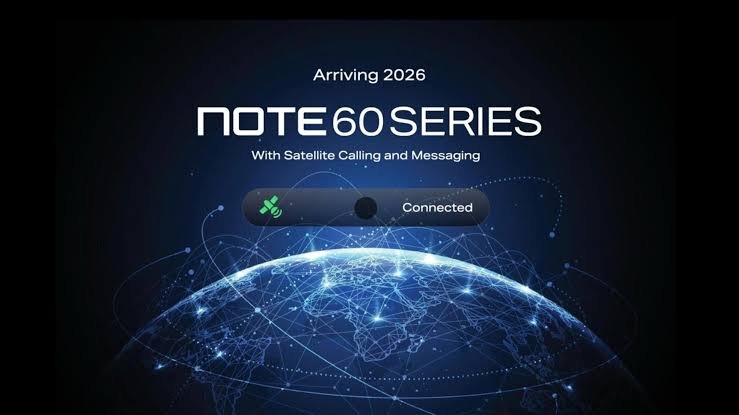
I first heard about this at CES 2026, a big tech showcase where brands debut their boldest innovations. Infinix used the stage to reveal the Note 60 Series, their next generation of phones with a major new capability: always-on satellite calling and messaging. Unlike earlier efforts from other brands that limited satellite features to emergencies or specific regions, Infinix’s approach feels designed for real life — letting you stay connected even where there’s no cellular coverage at all.
What Satellite Calling to Phones Really Means
Talking about Satellite Calling to Phones, we refer to a system that is not based on of the traditional cell towers. On the contrary, your phone is able to speak to satellites that are in orbit around the earth. To most people, when you make a normal call, what happens is that your phone calls a nearby tower, and thereafter, through the network. However, when a phone has satellite communication built into it, that signal will be able to go out into space and back down to another connection – possibly to someone in any of the individual points of the world.
The version offered by Infinix uses voice calls and two-way messages, on a network that is supposed to automatically switch between mobile and satellite. It implies that when you are in the city and enjoy mobile connection, you make use of that normally. Go to a remote place where there is no signal the phone automatically goes to the satellite mode without having to set it up. Users do not need to sign up to different service and alter SIM settings the transition is automatic.
The speed of the transmission is not made to stream videos or download large files, it is approximately 4 Kbps however it is sufficient to support voice and simple messaging. Practically that is what you desire when you are out of the conventional networks. You will be able to make HD-quality calls and texts even where your network of carriers has disappeared.
Why This Matters to You
This change matters to you if you are a frequent traveler, you live in a region with spotty coverage or even you just need a sense of security. Consider climbing up and down mountainous paths, riding in the deserts, cruising or researching in isolated areas. Nowadays, you can carry either a dedicated satellite phone or a dedicated communicator but these are costly, heavy and cumbersome to carry on a daily basis. What Infinix is promising is a satellite connectivity that has been included directly in the phone that you already have but does not need any addition of extra devices or tricky set-ups.
You may also happen to be a person who is trapped within a building or underground where cellular signals do not work. The use of Satellite Calling to Phones in such instances is more of a necessity rather than an indulgence.
This also drives the smartphone connectivity to a future where the coverage does not depend on human infrastructure. Infinix claims that its system would cover almost two-thirds of the surface of the earth which is larger than what a number of existing satellite solutions provide. It does not imply the full worldwide connectivity, but it is a step in the right direction of global connectivity.
How It Works
You might be wondering: Is this just marketing buzz, or can it really replace cellular networks when needed? The key is in how Infinix has designed the system.
Satellite Calling to Phones doesn’t pretend to offer broadband speeds or replace every service you use today. Instead, it focuses on what matters most in weak or no network scenarios: clear calls and messages. That’s a smart focus because it doesn’t overpromise. Voice calls and SMS are vital communications, and they require much less bandwidth than video calls or file transfers.
The other practical consideration is the switching between networks of the phone. I do not need to drag a setting or switch a button, the phone is programmed to work it out on my behalf. It compares the availability of signal and automatically connects me, either by satellite or cellular, when required. To the lay person who is not a techno guru, that smooth experience makes this real Satellite Calling to Phones worth the effort, not a sham.
What Infinix Showed at CES 2026
Infinix was not only theorizing about satellite calling at CES 2026, but they showed it. They demonstrated how the Note 60 Series would rely on the satellite connection to remain connected when the traditional networks fail. On the one hand, it was one thing to watch a picture on the stage, and another to realize that this might be a real component of the ordinary phones in the nearest time.
Besides satellite calling, other complementary technological features that were underscored by Infinix include advanced cooling systems, magnetic AI accessories, and design enhancements. In my case though, the most interesting was the communication shift as it creates avenues to users who do not work or travel inside cities but rather to the adventures or to live in isolated areas.
What This Means to the End-Users.
Unless you live in or travel to places where network coverage is reliable, Satellite Calling to Phones is not going to press particularly as an urgent need. The beauty of the way Infinix is deploying it though is that you not only get the features that you are already using on a daily basis, but also a safety net of satellite backup without having to give it another thought.
At that, there are some practical considerations:
Speed Limitations: Don’t expect fast data, streaming, or large file transfers through satellite. It’s built for calls and messaging first.
Battery Impact: Satellite radios consume more power than cellular radios. While Infinix hasn’t shared official battery figures yet, always-on satellite features could drain your battery faster than you expect if used extensively. For now, treat it as a connectivity backup rather than your main network.
Transition-Friendly: The automatic switch between cellular and satellite networks makes this feature easy to adopt. You don’t need to configure anything manually
How You Should Prepare
Should you be enthusiastic about the prospect of being a genuinely global network, there are some things you can do even before the Infinix phones reach the market:
- Consider Your Current Phone Usage:
In case you are used to dropped signals or tend to work remotely, the Satellite Calling to Phones will bring some real value. As the technology advances, it is an addition that can be more essential with the use of the city on a regular basis. - Follow Ups as Note 60 Approaches:
Infinix has not released prices or specific schedule yet. Monitoring official announcements will assist you in making a decision to upgrade or not and when to upgrade. - Observe Carrier and Regulatory Support:
Satellite services are usually subject to the acceptance of local regulators and carriers. You should ensure that it is well supported in another country or abroad before you trust it.
Looking Ahead: A Wider-Coverage Future.
Their shift towards satellite connectivity is not novel to Infinix, but the manner in which they are addressing it, incorporating it into their regular phones without requiring costly hardware upgrades, might help them go viral. It demonstrates that mobile connectivity is changing to go past cell towers and Wi-Fi hotspots to a more reliable and robust system that is truly global.
Infinix is challenging us to look at the way we are all keeping in touch i.e. both in the cities and everywhere we go. It is a thrilling look at a future where there may come a time when no signal is no longer used.