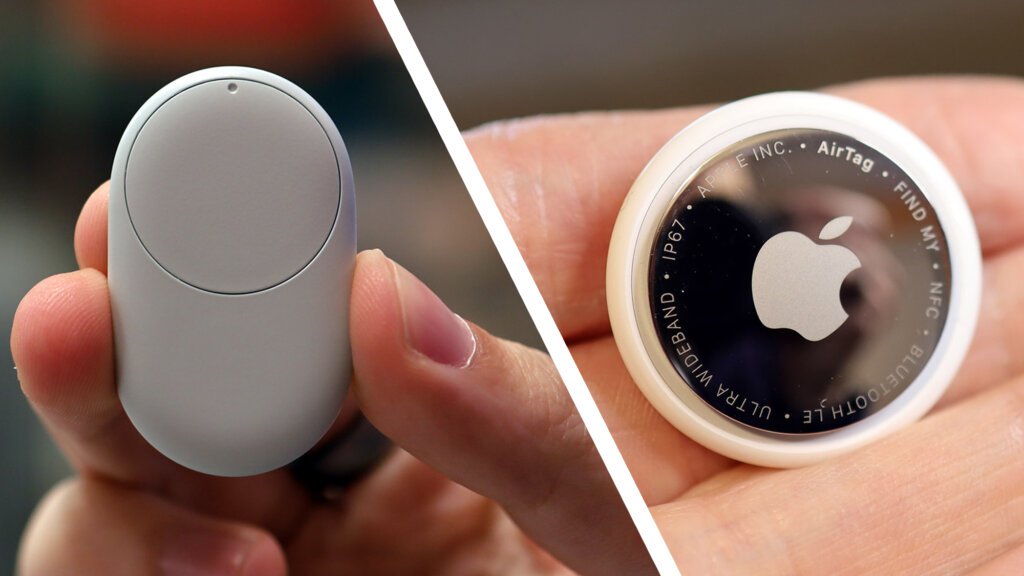
Google has finally entered the item-tracker market with the new Pixel Tag, giving Android users a first-party alternative to Apple’s popular AirTag.
Announced at Google’s Made by Google event on August 12, the Pixel Tag is designed to help you find everyday items such as keys, wallets, bags and luggage. It connects to Google’s Find Hub network and uses Bluetooth and Ultra-Wideband technology to help locate lost items.
But how does Google’s new tracker compare with Apple’s AirTag?
Here’s what you need to know about the Google Pixel Tag vs Apple AirTag.
What Is the Google Pixel Tag?
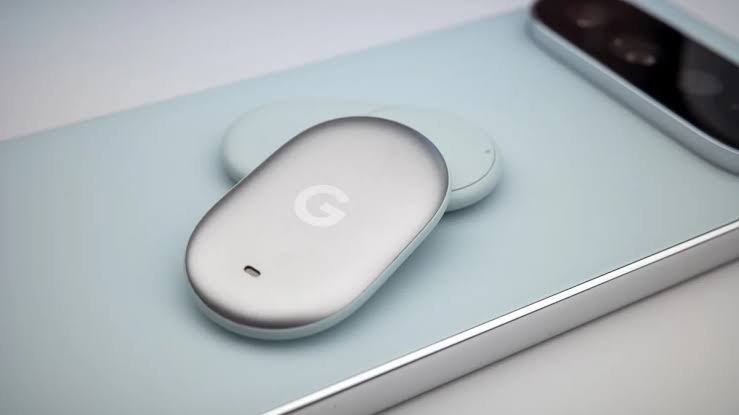
The Pixel Tag is the first of Google’s own Bluetooth item tracker.
It is a small gadget that you add to the object you don’t wish to lose, similar to an AirTag. This will enable you to then view the position of the tracker on your phone.
For instance, you might put one on your suitcase prior to going off on a trip. If you’re unable to locate your bag, you can open Google’s Find Hub app to see where it is.
The Pixel Tag can also make a sound when you’re nearby, making it easier to find something that is hidden under a sofa, inside a room or somewhere else nearby.
Google is selling the Pixel Tag for $29 a tracker and $99 for four.
But it’s not for sale right now, the Pixel Tag is a thing of the future. Google will roll out on November 11, 2026, according to Google.
How Does the Pixel Tag Work?
The Pixel Tag helps you find what you’re looking for with Google’s Find Hub network.
If the tag is in the vicinity of your phone, the phone and tag can communicate directly via Bluetooth. The Find Hub network can assist in reporting the location of the item if it is located farther away.
It works because the Android devices that are compatible with it are able to locate the tracker and securely update its location.
The Pixel Tag also features Ultra-Wideband (UWB) and Channel Sounding (Bluetooth) functionalities. These technologies can help you determine more accurately the direction and distance of the tracker if you are looking for them near you.
That will come in handy if you know that your keys are somewhere in the house, but don’t know where.
Read More: Google Pixel 11 Series: Everything You Need to Know Before Buying
How Does Apple AirTag Work?
The AirTag is based on the same principle as Apple.
Put an AirTag on an object and locate it via the Find My network. Nearby compatible Apple devices can offer more precise location information when the AirTag is in the vicinity.
The AirTag also has a speaker which can be used to play a sound to help you locate your belongings.
The second generation of the AirTag will be released in 2026 and will cost $29/one and $99/4, which is the same price as Google’s new tracker.
In other tech comparisons, one product may be much cheaper than the other, but that’s not the case here.
The most significant difference between Pixel Tag and AirTag is your phone.
The biggest difference between the Pixel Tag vs AirTag isn’t necessarily the hardware. It’s the ecosystem each tracker belongs to.
The Pixel Tag is designed with the support of Google’s ecosystem of Android and Find hub.
AirTag will be built to work with Apple’s iPhone, iPad and Find My system.
This means an Android user should generally have the best experience with Pixel Tag and an iPhone user will have the best experience with AirTag.
It makes sense to purchase an AirTag if you have a number of Apple gadgets already, as it integrates seamlessly into the Find My system you are already using.
Likewise, Android users who rely heavily on Google’s ecosystem may find the Pixel Tag more convenient.
Pixel Tag Has Some Interesting Tracking Technology
Google is attempting to improve the Pixel Tag’s usability beyond being a Bluetooth tracker.
One of its key technical selling points is its UWB and Bluetooth Channel Sounding.
UWB can deliver direction, and with the use of a compatible device, Bluetooth Channel Sounding can offer a distance range estimate.
The technology can be used to give you a sense of distance and direction when you’re looking for something nearby, says Google.
The technology, in real world terms, can help you find your lost bag rather than just tell you it’s close by.
But, compatibility with hardware is required for the most advanced features.
What About Battery Life?
The Pixel Tag is powered by a replaceable CR2032 coin cell battery and will have a lifespan of over a year.
This is crucial as you will not have to recharge the tracker every few days or weeks.
The tracker is also dust and water resistant (IP67), providing some protection from daily exposure to dust and water.
It is great for items like bags, bags for luggage, and other items that may occasionally come into contact with rain or splashes.
Pixel Tag vs AirTag: Which One Has Better Range?
Unlike range it’s hard to say which one is the winner just yet, since both are reliant on Bluetooth, as well as the Bluetooth network of the devices in proximity, and each device’s individual tracking network.
The more important one is the power of your network.
Pixel Tag uses Google’s Find Hub network, AirTag utilizes Apple’s Find My network.
The more compatible devices there are around a lost tracker, the easier it will be to update its location.
This implies that it might be different for you based on your location and the number of devices that you can find in the vicinity.
Do you have a Pixel Tag to share with other people?
Google is also adding a new feature to the Pixel Tag to make it easier to use on shared items.
The Pixel Tag can be shared with other people via Find Hub, which may be helpful for items that are shared by family members.
For instance, a family might put a Pixel Tag on a shared set of keys or luggage and hand it out to several members so they can all help get the family back to the car.
Google’s method may be more useful in this respect than being just a way of locating one’s own possessions, making the tracker more useful.
So, which one should you buy: Pixel Tag or AirTag?
The solution is very easy.
The Pixel Tag is the more obvious addition for Android users, as it is centered around Google’s Find Hub ecosystem.
The AirTag is more useful for those who use the iPhone since it works seamlessly with the company’s Find My network.
The price doesn’t differentiate between the two. One tracker is $29 and four pack of trackers is $99.
The Pixel Tag also has some interesting papers benefits, especially the fusion of UWB and Bluetooth Channel Sounding. However, AirTag has had years to create Apple’s tracking environment.
So Google has a challenge to meet.
Conclusion
The Google Pixel Tag vs Apple AirTag fight is just another instance of Google and Apple playing against each other within their respective ecosystems.
Google’s new tracker costs the same as Apple’s AirTag, offers similar basic functionality and adds some interesting tracking technology. For Android users, the Pixel Tag could become a useful accessory for keeping track of keys, bags and other belongings. For iPhone owners, Apple’s AirTag remains the obvious choice because of its integration with Find My.
The real test will come after the Pixel Tag launches on November 11. That’s when users will be able to see how well Google’s Find Hub network performs in the real world. For now, Google has finally given Android users a first-party tracker worth watching.