The EU AI Act transparency rules are now officially live across Europe. Consequently, the European Union is forcing tech companies to clearly label AI-generated content. If they fail to comply, these organizations face massive financial penalties and strict operational crackdowns.
As of August 2nd, a critical phase of the EU’s landmark AI Act actively took effect. These new transparency obligations specifically help users easily identify chatbots, deepfakes, and artificially altered content online. Therefore, for tech companies and platforms operating within the EU, this date marks a major shift in compliance strategy and product development.
⚡ Quick Facts: The EU AI Act Rollout
- Effective Date: Core transparency mandates officially went live on August 2, 2026.
- The Mandate: Tech companies must clearly label synthetic audio, video, image, and text content for end-users.
- Financial Penalties: Violators face crushing fines of up to €15 million or 3% of global annual turnover.
- Grace Period: Legacy AI systems launched before August 2nd have until December 2, 2026, to fully comply.
⚖️ Providers vs. Deployers: Knowing Your Obligations
The new regulatory framework draws a distinct, legal line between different types of AI businesses. Specifically, the EU differentiates between providers and deployers. Note that heavyweights like Meta and xAI (with their powerful Grok 4.5 model) often operate as both simultaneously.
🏢 For AI Providers
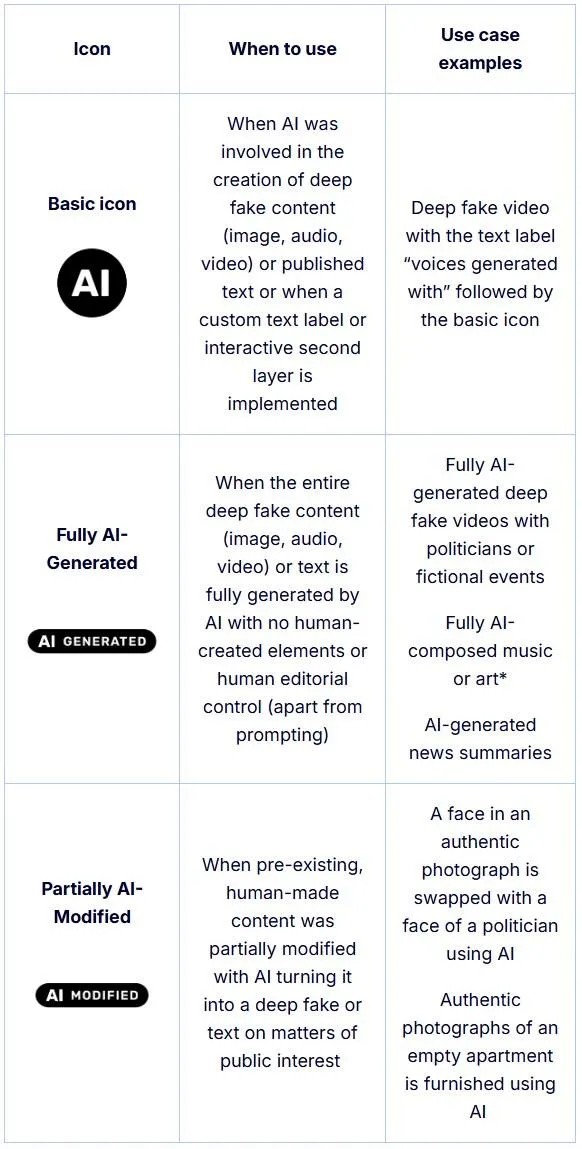
Companies developing AI systems must architect their platforms to explicitly notify users. You must clearly state when a person is interacting with an AI rather than a human. Furthermore, synthetic media must include embedded, machine-readable markers. These markers allow systems to programmatically detect artificially generated content.
🌐 For AI Deployers
Deployers are the platforms actively utilizing these systems. They carry a heavy burden of visual transparency. Any AI-generated or altered media—especially deepfakes engineered to look authentic—must feature a visible, obvious label for the end-user interacting with the content.
🏷️ Standardizing the Labels
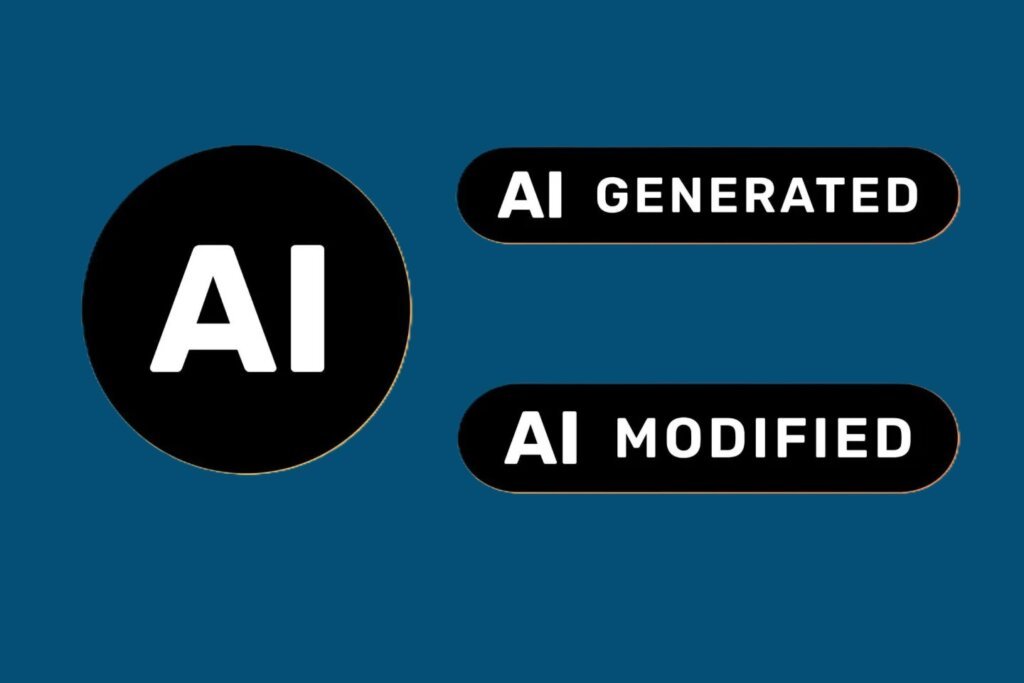
To streamline this massive operational shift, the European Commission officially released a set of standardized AI disclosure icons. Adopting these specific EU-designed labels remains entirely optional. In fact, this approach mirrors similar independent efforts already rolled out by platforms like TikTok and Instagram.
However, the underlying mandate to provide clear transparency is completely non-negotiable. Ultimately, the Commission’s overarching goal is to standardize the user experience. By doing so, they hope to help the public make informed decisions and aggressively mitigate the spread of online misinformation.
⏱️ The Business Impact: Heavy Fines and a Ticking Clock
From a business analysis perspective, the operational risks of ignoring these changes are incredibly severe. Companies failing to meet the transparency standards face brutal penalties. Regulators will levy fines of up to €15 million (approximately $17.2 million) or 3% of a company’s global annual turnover.
Fortunately, regulators provided a brief adjustment window. These strict rules are immediately enforceable for any new AI systems entering the market today. Conversely, organizations possess a brief window to adapt their legacy infrastructure.
AI models and services launched prior to August 2nd received a temporary reprieve. They currently enjoy a four-month grace period. Consequently, product and compliance teams have until December 2nd to fully align their legacy systems with the EU’s new transparency framework.