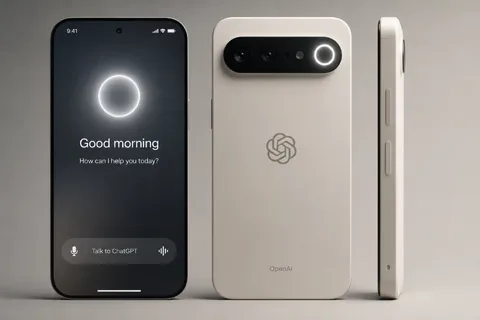
OpenAI is developing a groundbreaking OpenAI AI Smartphone that aims to replace traditional app-based interfaces with intelligent AI agents. The device will feature a custom MediaTek chipset and is expected to enter mass production in early 2027, targeting the premium AI device market.
A Bold Move into the Smartphone Market
Industry analyst Ming-Chi Kuo reports that OpenAI is accelerating its efforts to launch a smartphone defined entirely by AI agents, moving away from conventional apps. The anticipated release is set for the first half of 2027, coinciding with the launch of Samsung’s Galaxy S27 series. However, OpenAI’s primary goal appears to be positioning its AI phone as a direct competitor to Apple’s iPhone 18 Pro.
Cutting-Edge Specs and Features
Recent updates suggest MediaTek will lead the development of the phone’s exclusive chipset, shifting away from earlier rumors of collaboration with Qualcomm. Here’s a breakdown of the key specifications:
- Processor: A custom MediaTek Dimensity 9600 SoC, built on TSMC’s advanced 2-nanometer (N2P) process.
- AI Capabilities: Dual-NPU (Neural Processing Unit) architecture designed for specialized AI tasks, such as vision-based sensing and language reasoning.
- Image Signal Processor (ISP): Enhanced HDR pipeline for real-time visual perception, enabling the AI agent to analyze and understand the user’s environment.
- Memory: LPDDR6 RAM to handle high-bandwidth requirements for continuous AI operations.
- Storage: UFS 5.0 storage for fast read/write speeds, ensuring smooth performance during persistent AI tasks.
- Security: Protected Kernel-based Virtual Machine (pKVM) to safeguard sensitive user data and AI processes.
These advanced features highlight OpenAI’s focus on creating a device optimized for AI-driven functionality, rather than traditional smartphone use.
Market Strategy and Ambitions

OpenAI plans to produce 30 million units of its AI smartphone between 2027 and 2028, aiming to capture a significant share of the premium smartphone market currently dominated by Android.
Ming-Chi Kuo emphasizes that OpenAI’s strong brand presence and massive user base—thanks to ChatGPT’s popularity—could help the company transition from software to hardware seamlessly. By bundling the phone with subscription services, OpenAI could create a “sticky” ecosystem similar to Apple’s strategy with the iPhone, driving long-term user engagement and revenue.
What’s Next?
While the OpenAI smartphone is still in development, its success could mark a major shift in mobile AI computing. If OpenAI delivers on its promises, this device could redefine how users interact with technology, making AI agents the centerpiece of the smartphone experience.