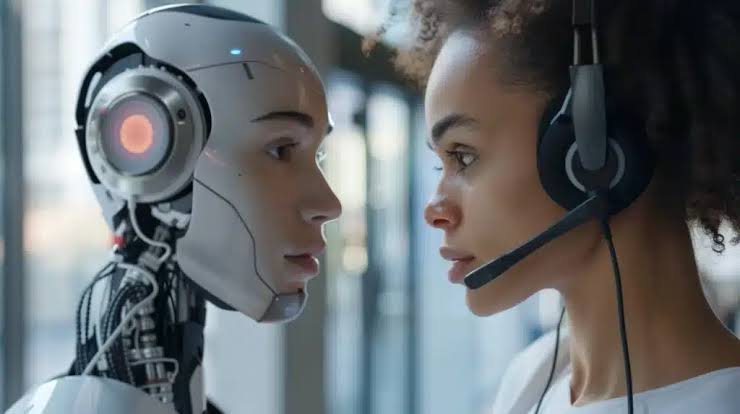
This has sparked a serious conversation: AI Assistants vs Human Interns — which makes fewer mistakes?
From writing reports to analyzing data, both AI assistants and interns are now competing in similar roles. Businesses are looking for speed, accuracy, and efficiency—but also reliability. The truth is, both sides have strengths and weaknesses. In this article, we’ll break down how each performs, where errors happen, and how you can decide which is better for your workflow.
Accuracy and Error Rates: Where Mistakes Really Happen
Accuracy is one of the most significant factors when comparing AI Assistants vs Human Interns.
AI assistants are consistent. They are capable of working on huge volumes of information in a short period of time, and can stick to instructions without fatigue. AI usually do not commit as many errors as humans do when it comes to repetitive duties such as data entry, formatting or simple research.
However, AI is not perfect. Generating information that sounds right when it is not, or the opposite, is a weakness of it and is known as hallucination. AI may also use prior stored data or may not understand the context in case of ambiguity in instructions. These errors may be difficult to discern and occasionally more subtle.
However, human interns commit error due to other causes. Errors can be caused by inexperience, deficit of confidence or failure to understand instructions. In contrast to AI, interns can miss some details or take more time to accomplish a task.
However, this is the most important difference: people have an ability to learn. When provided with an appropriate feedback, interns become better with time, whereas AI performance relies on the specifics of its implementation and coding.
Therefore, in the AI Assistants vs. Human Interns debate, AI might be more consistent, but humans have the benefit of flexibility and development.
Learning Curve, Supervision, and Speed.
The aspect of speed is where AI assistants shine the most.
Within a few seconds, an AI has the potential to produce reports, summarize documents, or process data that a human intern could be taking hours to complete. This renders AI invaluable to companies that require rapid completion of tasks.
However, speed is not always equal to accuracy.
AI usually needs to be supervised to ensure the results are correct. Without being examined in detail by humans, errors remain unnoticed. In this regard, AI does not kill work, it displaces it. There is still someone to check and refine the results.
Human interns are slower, particularly initially. They require time to learn, enquire, and gain confidence. They are however more effective once trained and need less supervision.
The next consideration in the AI Assistants vs Human Interns argument is judgment. Artificial intelligence adheres to patterns and instructions, but it does not really comprehend context the way humans do. The intern can use critical thinking, posing clarifying questions and making judgments through real world knowledge.
Read Also: Mini PC vs Laptop: Which One Should You Choose in 2026?
In short:
- AI can be quicker, yet it requires control.
- Interns are slower and get better with time.
- What is More Important, Consistency or Creativity?
One of the strengths of AI is consistency. It can repeat exactly what it does, making it less variable and producing standard results. This can be particularly useful with structured tasks such as formatting, coding or processing data.
But in the area of creativity, human interns shine.
Interns are able to think outside the box, come up with new ideas, and adjust to any situation that might be unforeseen. They introduce a human touch, which AI cannot possibly replace. It can be a big difference when it comes to activities such as content development, brainstorming, or problem-solving.
Lack of input quality is another weakness of AI. Bad instructions can result in bad performance. Instead, interns have an opportunity to seek clarification and make necessary changes.
When comparing AI Assistants to Human Interns, it is evident that:
- AI is good at consistency and repetition.
- Man is highly creative and flexible.
The value of each is determined by the task in question.
Verdict: Which one Commits few mistakes?
Then the question is, AI Assistants vs Human Interns: in which case are fewer mistakes made?
It is not as straightforward as choosing one instead of the other.
AI assistants are less prone to errors in routine, formalized activities. They are rapid, regular, and effective. Yet their errors, as they may arise, can be more difficult to spot and rectify.
Human interns make more mistakes as a beginner but they get better with practice. They provide critical thinking, flexibility, and creativity-all qualities that minimize errors in tricky or unforeseeable work.
In 2026, the wisest solution will not be to pick between AI and humans, but rather to integrate them.
Go fast and go with AI. Judgment, creativity, and oversight Use human interns. The combination of these two forms a balanced economy in which weaknesses are reduced and strengths maximised.
In summary, the Future Is Collaboration, Not Competition.
This is not the debate of AI Assistants vs Human Interns but rather a debate of collaboration.
Human roles are not being replaced by AI and interns are not becoming a thing of the past. Rather, the workplace is becoming a hybrid model where the two work together.
When you aim to eliminate errors, the most optimal answer is obvious: use AI to do what it can best, and leave human intelligence to where it is most needed.
Ultimately, it is not the one you choose or the other that results in fewer mistakes, but the fact that when you use both, you use them right.