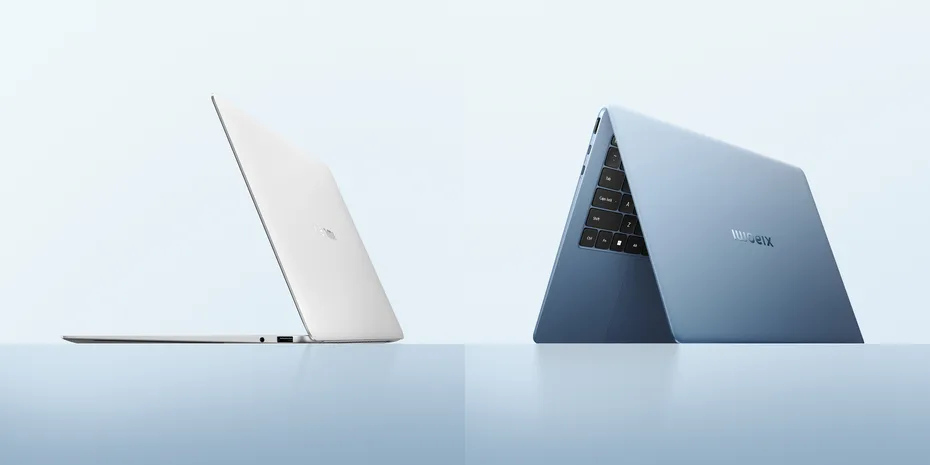
The Xiaomi Book Pro 14 has been officially announced, and it’s positioned as an “ultra-thin” Panther Lake laptop that can be configured with up to the Intel Core Ultra X7 358H CPU. Pricing details are yet to be confirmed.
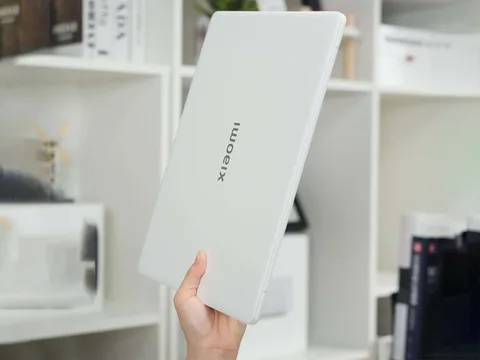
Xiaomi has released a new laptop, the Book Pro 14, and, as one of the recent leaks had it, it uses the Panther Lake lineup. It is said that the brand can be configured with the Intel Core Ultra X 358H processor, a high-end model in the line that uses the Arc B390 iGPU.
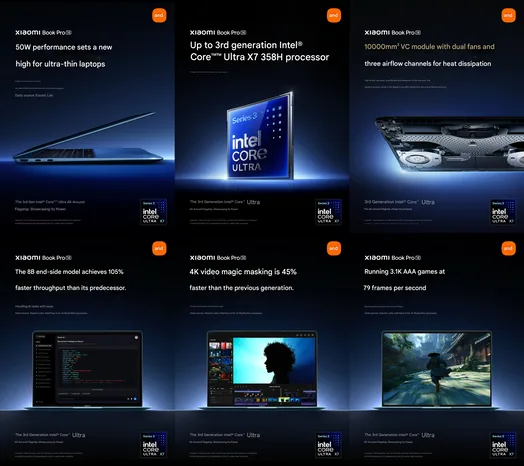
The integrated graphics can compete with AMD Radeon 890M, and it is capable of providing a similar gaming performance to the NVIDIA RTX 4050 Laptop as we have tested. The same iGPU will make the Book Pro 14 capable of playing AAA games with more than 60 FPS, according to Xiaomi, which is being boasted as a big thing as in terms of the form factor of the laptop.
By the way, Xiaomi as well as boasts that, although the Book Pro 14 is designed to be ultra-thin, the device is capable of providing 50W of performance even when unplugged. The brand also reaffirms that the laptop is equipped with a module of vapor chamber of 10,000mm2 in which there are two fans and three channels of airflow. This cooling design is guaranteed to be stable even when the loads are heavy.
A premature benchmark performance on Baiwen Technology Weibo account indicates that the laptop is capable of a score of 124 in single-core and 1,103 in multi-core on Cinebench R24. The 3D mark time spy score is 7,163 and 6,872 on fire strike extreme and steel nomad respectively. These are in line with what an Intel Core Ultra X7 358H is expected to score.
The promotional design marketing reveals that the laptop will have a reasonable port set up to its size. To be more precise, there are 1 HDMI, 3.5mm headphone jack, 1 USB Type-A, and 2 USB Type-C ports with one of the latter featuring the Thunderbolt logo on it (Anker Prime TB5 Docking Station curr. $339.99 on Amazon).
At present, Xiaomi has not communicated anything regarding the cost but the laptop will be fully revealed shortly in China. It is likely to be rolled out into the international market thereafter.
Source(s)
Baiwen Technology, Lei Jun, and Lu Weibing on Weibo