Fast charging sounds like magic. You plug in your phone for 10 or 15 minutes, and suddenly you’re back to 50% or even 70%. Honestly, I loved my phone for that it charges to 100% within 20 minutes. The honest truth is brands advertise it as a lifesaver for busy people like you and me. You don’t have to keep waiting overnight. No more battery anxiety. Just plug, charge, and go.
But if fast charging is so perfect, why do so many people complain about battery health dropping after a year? Why do phones that once lasted all day suddenly struggle to survive till evening? My phone’s battery health dropped and I didn’t even know this truth, I kept blaming it on my power bank.
Today, let’s slow down and talk honestly about the truth about fast charging — not the marketing version, but the real experience that affects your phone, your battery, and your long-term usage.
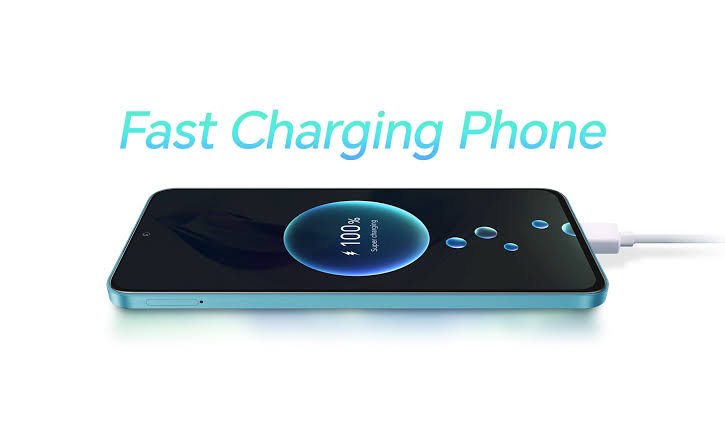
The Reason Fast Charging Became so Popular.
Well, we have to be honest, our lives are fast. We are streaming, scrolling, gaming, working, and communicating twenty-four hours a day. Battery drain is inevitable. This issue was noticed by the brands and they provided a solution, which makes it impossible to resist, they suggested faster speeds of charging.
We had leaped 18W, then 33W, 67W, 120W and now 200W. This is a step in the right direction on paper. In real life, it really fast charging to your rescue when you are in a hurry or when your battery is running low.
However, there is one thing that the brands would not normally describe in a straight-forward way: speed is a trade-off.
What Really Goes on in your Battery.
The phone battery is composed of lithium-ion cells. These cells do not simply fill up as water in a cup. They undergo a chemical reaction which produces heat, pressure and stress.
When you recharge your phone you are putting a lot of power in the phone battery in a very short period of time. This leads to increased heat, particularly at the beginning of charge up to 50-70 %. The silent killer of batteries is heat.
Phones will purport to have cooling systems – and a lot of them do. None of the cooling systems eliminates entirely heat stress. During the course of time, the frequent charges gradually deteriorate the quantity of charge your battery is able to hold.
It is one of the main components of the truth about fast charging that advertisements do not focus on.
Not All Phones Charge Quickly.
And the thing that is not known to many is that fast charging speed is not only controlled by the charger but by the software. The phone will determine the amount of power to receive depending on the temperature and battery condition, in addition to internal safety regulations.
This is the reason why your phone charges very rapidly initially and later it slows down. Advertisements claim 0-100% in 20 minutes, but this is often only true during the initial half.
Therefore when you believe that your phone is being charged quickly all the time, it is actually charging itself, silently.
Battery Aging Problem Nobody Likes to Talk About.
Would you mind me asking you something? Did you ever realize that phones that charge incredibly fast actually lose battery health much faster?
That’s not your imagination.
A high charging frequency increases the aging of the batteries. It will not cause your phone to stop working, just that you will be able to reach the “battery replacement stage sooner. This is not the thing that brands would talk about as it does not sound very exciting. But this fact forms a large element of the Truth About Fast Charging, convenience to-day, compromise to-morrow.
Is Fast Charging Bad? Not Exactly
Now, let’s be clear. Fast charging is not evil. It is not killing your phone overnight. The question is on the frequency and irresponsibility of its use.
Fast charging should be considered a quick fix and not a way of life. Consider it comparable to energy drinks – handy on occasional occasions when you require a pick-up, but not very good when you become dependent on them. When you can fast-charge when you are in a hurry, and slow-charge overnight, your battery will pay you off in the long-term.
The Chargers and Cables Matter More than you think.
It is not that all chargers and cables are created equal, that is something brands do not underline enough.
Cheap third-party chargers are not properly regulated and controlled in terms of temperature and voltage, and they can pretend that they are fast chargers. Their usage may lead to overheating, unreliable charging, and permanent damage to the battery in the long run.
Certified chargers and cables should be used every time when you really care about your phone. This is an easy practice that will defend you against a lot of latent dangers associated with the rapid charging. This is a practical suggestion that is not always found when speaking about the Truth About Fast Charging, but one of the simplest solutions.
Read Also: Top 10 cheap Smartphone you can buy under ₦200k this January
Heat Is the Real Villain
Heat is more important than speed, it is the one thing you should not forget.
When you charge your phone, play games, watch videos or use mobile data, internal temperature rises. Then add the fast charging to it, and you are putting strain on the battery on several fronts.
To secure your phone, you should:
- Do not overuse when charging.
- Take off thick cases in rapid charging.
- Charge in cool environments
Such simple behavior increases battery life than any software update could ever increase.
Is It a Good Idea to Quit Fast Charging?
No – and you need not feel guilty about enjoying it.
The power of fast charging is outstanding when it is used wisely. The issue begins as it becomes your sole method of charging your phone. Assuming that your phone has such modes as optimized charging or slow charging mode, then enable them. Quick charge is when you are in a hurry. Charge in a normal manner when you sleep or when you are relaxed. This is the most intelligent lesson learned in the truth about fast charging.
What Brands Should Be More Open about.
Speed sells and this is where brands pay attention. What they hardly provide an explanation on is longevity. They do not discuss in detail the impact of charging habits on the health of batteries after one or two years.
This does not imply that brands are not telling the truth, they are just telling half the truth. You are the user and the power lies with you. The knowledge of how a fast charging works will guide you in making a better decision, rather than have you afraid of the technology.
In Conclusion
Fast charging isn’t a scam. It’s also not magic. It is a concession between the welter and battery well-being.
You already know the truth about fast charging, which means that you will no longer worry and begin to charge more intelligently. You get to know when you should go fast and when to go slow. And that is the balance that, not months, but years, keeps your phone doing good.
Technology must be on your side at the end of the day not silently exhausting itself by working hard to reach higher speeds.