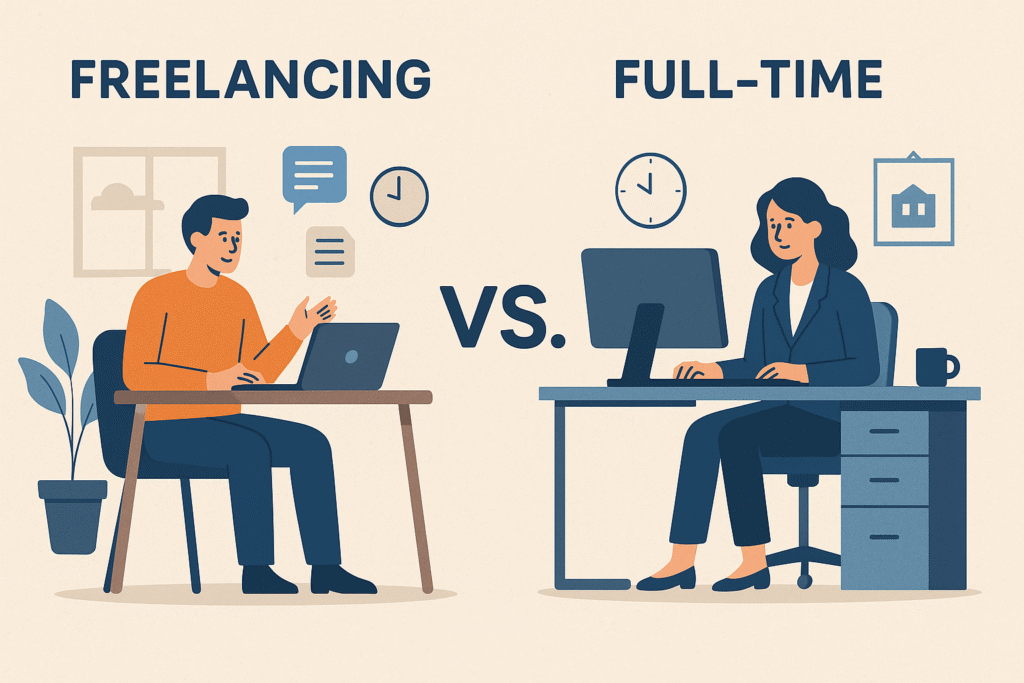
Tech careers are booming in 2026, and so is burnout. Be it coding or designing, or managing systems, the pressure of the industry can take its toll. This is why the question of Freelance Tech Career vs Full-Time Tech Job is more topical than ever. Freelancers have flexibility, and full-time employees have stability-but both routes are accompanied by stress.
It is possible to make the right career choice, understanding the danger of burnout, management of workload, and the effects of lifestyle. This article will shed light on both roads and will help you pick a tech career to pursue that keeps your psychological well-being intact and your productivity at its highest level.
Freelance Tech Career: The Flexibility, Freedom, and Stress Factors.
The future of Freelance Tech Career in 2026 is the most flexible. You choose your clients, projects and time. This autonomy gives you the opportunity to work wherever you wish, to test different technologies and to have a break when you feel like. This is the ultimate remedy to the traditional work stress to many.
Nevertheless, this freedom is pressured. Freelancers tend to experience fluctuating income, deadlines and expectations of the clients. It is easy to work too much and lose distinction between work and personal life without a structured work environment. This renders freelancers very vulnerable to burnout.
Isolation is another factor. Although the full-time jobs offer support to the team, freelancers have the disadvantage of not getting peer support and mentorship since they usually work alone. There is additional mental pressure of dealing with taxes, promoting yourself and finding customers.
However, depending on strategies to reduce stress is possible. Uncertainty can be minimized by establishing fixed working hours, project management tools and developing a regular client base. It is also important to know how to say no to too many projects.
Concisely, the freelance career in tech is perfect in case one appreciates freedom and is able to cope with the erratic workloads, however, self-control must be maintained to prevent burnout.
Full-Time Tech Position: Predictability, Organization and Office Tensions.
The industry is still based on full-time technology employment. They offer some form of security that most freelancers desire with the constant incomes, benefits, and the chance of career advancement. The workers are able to concentrate only on technical activity without thinking about issues like acquiring clients, invoicing, and marketing.
However, there are balance issues. Several factors such as long working hours, strict project deadlines, and strict schedules might increase stress and cause burnout. Lots of full-time tech employees have to deal with repetitiveness, politics in the office, and the feeling that they have to constantly upgrade their skills, which may lead to psychological exhaustion.
The work-life balance is also blurred in hybrid or remote jobs, which is another burnout factor. Being at home is also likely to cause exhaustion even when one is at home, as there is the desire to be accessible at all times.
Although those exist, full-time positions offer resources that are not available to the freelancers. Mentorship, teamwork, human resources, and regular schedules can minimize the risk of burnout. Employees have the opportunity to go on vacation, use wellness programs, and concentrate on the development of skills without concerns about changes in the income.
To people who like a routine and constant stress is not their thing, full time technological jobs are a safer route to burnout, as long as they take care of their workload and mental health.
Critical Differences
Freelance Tech Career vs Full-Time Tech Job is usually reduced to control, stability and source of stress.
1.Control vs Structure: Freelancers have the best control over projects, schedules and full-time employees have routine. Freelance work can be a good match to you, should you be thriving on autonomy, and it can be very disciplined. Full time jobs may help eliminate stress in case you like to be guided and have a well organized workflow.
2. Income and Security: Freelancers have varying income and client reliance which is stressful. Workers who are employed full time earn constant wages, health insurance, and retirement packages. A significant source of burnout in freelancers is financial uncertainty, whereas office politics and deadlines are significant causes of stress in workers.
3. Flexibility and workload: Freelancers have the chance to choose when to work, but it is easy to work when overcommitted and to have long uncontrolled hours. Full-time technology employees are expected to work a set number of hours, yet peak times are likely to lead to excessive workdays. The two directions have to set limits in order to save the psychological health.
4. Proficiency Development and Stress: Freelancers will have to constantly advertise themselves and adjust to various customers, which is a psychological burden. Full-time employees might experience stress such as the need to up-skill or meet the demands of the office, mentorship and team support are known to reduce stress.
2026 Insights
The AI-based project management and productivity applications can be used by the freelancers, whereas remote work solutions and wellness can be used by the employees. Whether you work or not, it is important to balance work, set boundaries and focus on your mental health.
Conclusion
Freelance job is ideal when you want to be free and self-directed. Full-time tech positions are appropriate to those who value structure and order of development. It is important to know your personality, work style, and stress triggers in order to avoid burnout.
Frequently Asked Questions
1. Can freelancers avoid burnout entirely?
Yes, by setting strict schedules, managing client load, and using productivity tools. Boundaries are essential.
2. Are full-time tech jobs safer for mental health?
Generally yes, because of structured hours, support systems, and benefits—but burnout is possible without proper workload management.
3. Can you switch between freelance and full-time work?
Absolutely. Many tech professionals start as freelancers, then move to full-time roles—or combine both to balance freedom and security.
4. What’s the main stress factor for freelancers?
Income instability, client demands, and isolation.
5. What’s the main stress factor for full-time employees?
Long hours, office politics, and pressure to perform consistently.