If you’ve been paying attention to drone technology lately, you’ve probably noticed how fast things are evolving. Not long ago, flying a drone with a decent camera felt futuristic. Now, we’re talking about drones that can capture 8K video in full 360 degrees, giving you complete control of the shot after you land. That’s where the conversation around 8K 360 Drones vs Regular Drones really begins — and it’s one every tech enthusiast should understand.
I’ve spent time researching, flying, and closely following both categories, and what I’ve learned is this: these two types of drones are built for very different experiences, even though they might look similar on the surface. Let’s break it down in a way that actually helps you decide which one fits your curiosity, creativity, or workflow.
What Makes an 8K 360 Drone Different?
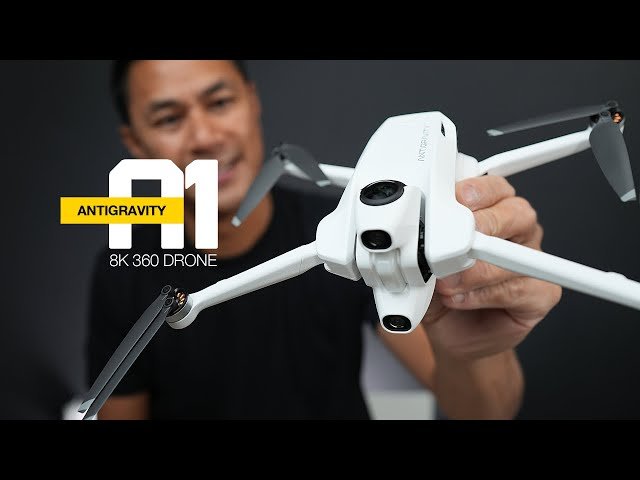
When we talk about 8K 360 drone, we do not only talk about resolution, but even about perspective. These drones have a camera with dual or multi lenses which get all the images surrounding the aircraft within a single time. You record the whole environment rather than facing the camera in a certain direction and hoping that you got the shot right.
What that is to you is liberation. You may fly first, and frame later. When you land you are able to pan, tilt, zoom and refocus your footage as though you were operating a virtual camera in the air. The 8K resolution is important as after you start to zoom into a 360 degree video you require the additional detail to ensure that all the footage is sharp and usable.
The regular drones, however, are far more traditional. They only use a single forward facing camera on a gimbal. And what you see is what you get, and although gimbals today are extremely stable, when flying your imagination is permanent.
The Experience of Flying is Different.
People do not talk about this enough. An 8K 360 drone is less tedious to fly, particularly when you are a beginner or trying something new. I have realized that when flying a 360 drone, I concentrate on movement and positioning aspects as opposed to being preoccupied with the camera angles. You do not worry about making a mistake and missing a shot since everything is recorded.
In regular drones, the flight is more controlled. You are always thinking about composition, tilt, yaw and camera direction. That is what is fun to many pilots. To others it might be restricting or taxing to the mind especially when making complicated shots.
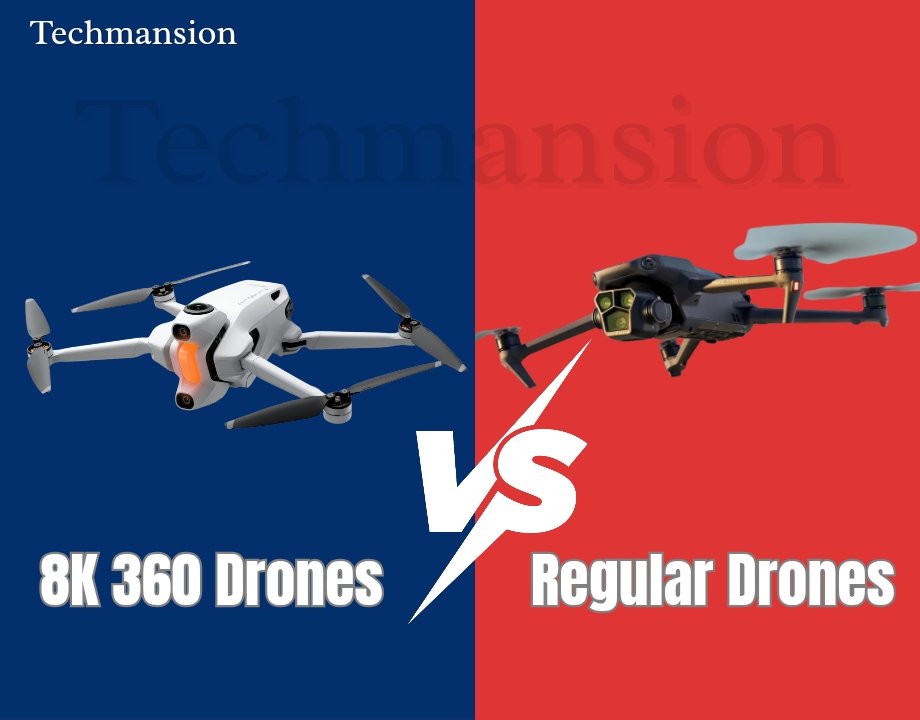
This distinction alone is such a massive component of the 8K 360 Drones vs Regular Drones argument, as it impacts not only the enjoyment of flying, but the content of the footage as well.
Read Also: Intel Ultra vs Apple M5 vs Snapdragon X Elite — Who Really Wins?
Video Quality is more than numbers.
Paper-wise, 8K sounds naturally are superior – and in most respects, they are. The 8K 360 filming is clear, vibrant and flexible, particularly in immersive filming, VR journeys, and movie narration.
But regular drones have not been left behind. A number of them capture gorgeous 4K and even 5.1K video with a fantastic dynamic range, color science and low-light capability. In case you want to be clean and direct aerial video which comes out of the camera and looks nice, regular drones still shine.
The 360 drones are leading the pack in the matter of storytelling. He is not merely presenting a scene but allowing viewers to explore the scene. That is strong, but also demands greater efforts of post production and a little more technical swagger.
Editing: It’s Creative or It’s Simple.
This is the point where you experience the difference as a user. It is fairly simple to edit the footage of an ordinary drone. You simply drag your clips within your timeline, cut, color grade and you are done. It is effective and foreseeable.
The process of editing 8K 360 is more sculptural. You are post-facto selecting of angles and inventing of camera movements that never physically existed, and testing of perspectives. I will not deceive you, it requires more effort on your computer and time. But when you like creative control it is incredibly satisfying.
When comparing 8K 360 Drones vs Regular Drones ask yourself what time do you want to be spent editing not flying.
Storage, Processing, and Practicality of the World.
It cannot be denied that 8K 360 footage is gigantic. The files are bulky and system memory is used within a short time span and you will also need a powerful computer to work with, in a comfortable manner. This is not a negative thing per se, just an aspect that you must be ready to deal with.
Regular drones are less demanding. They are more convenient and practical when it comes to their everyday use due to smaller sizes of files, quicker transfers and simpler archiving. Regular drones conform to a workflow better that includes flying, editing, and sharing, whereas drones with higher capabilities take more space in the workflow.
This is a more practical difference, which can be more important than specifications, particularly when you are going to fly recreationally or do a lot of traveling.
Use Cases: Who Every Drone Is.
In my case, 8K 360 drones are custom-made to those creators who wish to be on the edge in their work. They can be used in immersive travel videos, action sports, experimental filmmaking, and future-oriented content (VR and AR).
Aerial photography and videography continue to rely on regular drones. They are dependable, foreseeable and totally smooth. Regular drones are still a good option in case of clean cinematic shots, landscape shots, or commercial work where consistency is required.
That is why the discussion of 8K 360 Drones vs Regular Drones is not what is better and what is not, but which one fits your thoughts and ideas of creation.
The learning Curve and Accessibility.
Among the unexpected facts that I have observed is that 360 drones happen to be easier to use by novices in certain aspects. Since you are not thinking about the framing at the middle of the flight, you can concentrate on learning how to fly without any troubles.
With that said, the learning curve is revealed later in the editing process. This experience is reversed by regular drones – they need more attention during flight but less complexity during the post-flight period. It is significant to know what you would like to put your learning energy in as far as long-term satisfaction is concerned.
The Future of Drone Content
In the future, it is evident that 360 capture is gaining relevance. Social, immersive, and interactive storytelling is content moving past two-dimensional screens, 8K 360 drones are making the claim that they are designed to be used in the future, not the present.
Simultaneously, standard drones are not leaving. They are getting smarter, more stable and more able each year. To most of the creators, they will be the most convenient and dependable.
It is that balance that will make 8K 360 Drones vs Regular Drones such an interesting debate in the year 2026 and beyond.
My Final Thoughts
The lesson that I would like you to grasp as a result of this is that, you should not base your decision on hype. Consider your preferences in creating, the amount of time you would prefer to have on the editing side, and the type of stories you would enjoy sharing.
8K 360 drones provide unparalleled creative capabilities and content possibilities of the future. Regular drones provide ease, effectiveness and established functionality. There is nothing wrong with either option, they simply fulfill the various types of curiosity.
When you grasp those differences, then it makes it less confusing and a lot more exciting to decide between the two.